
Broadway Terrace House
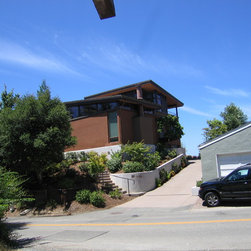
Located on a heavily wood site on the Oakland Hills ridge overlooking San Francisco Bay, this modern four-bedroom home is designed to grow and adapt with the owners and their children. The house exterior meets the fire requirements for Wildland-Urban Interface (WUI) requirements for fire resistant construction.
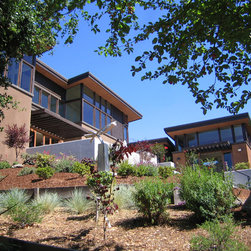
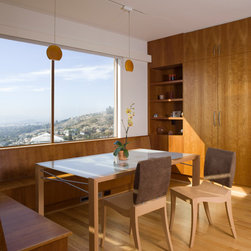
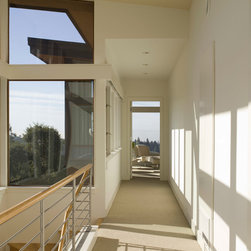
The stunning views of downtown San Francisco , the Golden Gate Bridge, and Mount Tamalpais had to be the focus of any construction on the site. In addition, the interaction between the site and the home was well considered during the planning stage. To accomplish these objectives, the house is designed as three discrete structures that embrace the central knoll of the property in an 'L' structure.
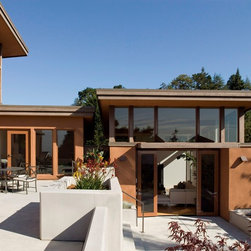
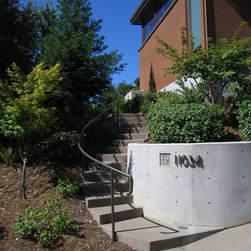
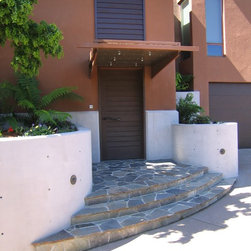
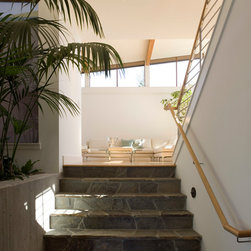
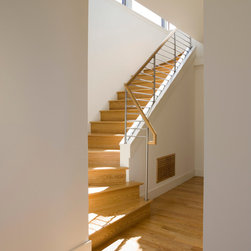
The procession between these three structures is a journey from darkness to light, from limited views to wide vistas, and from compressed space to expansive volume. This succession of spaces is a reminder to the owners and visitors of the dynamic qualities of the site, with each structure intended for a distinct use. The first structure encountered upon approaching the home is the entry pavilion, squeezed between the other two structures, this area is dark and cool, recessed into the knoll an surrounded by plantings.
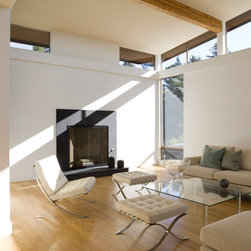
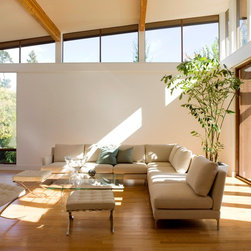
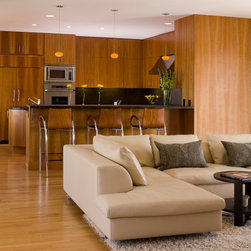
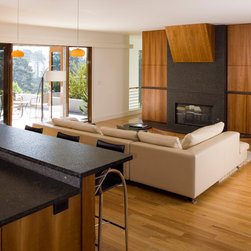
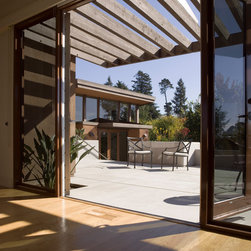
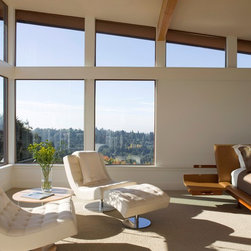
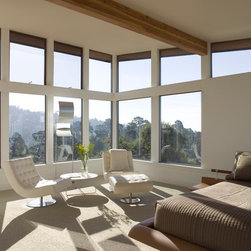
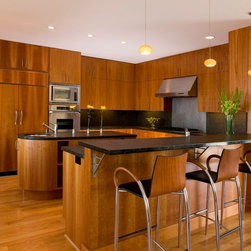
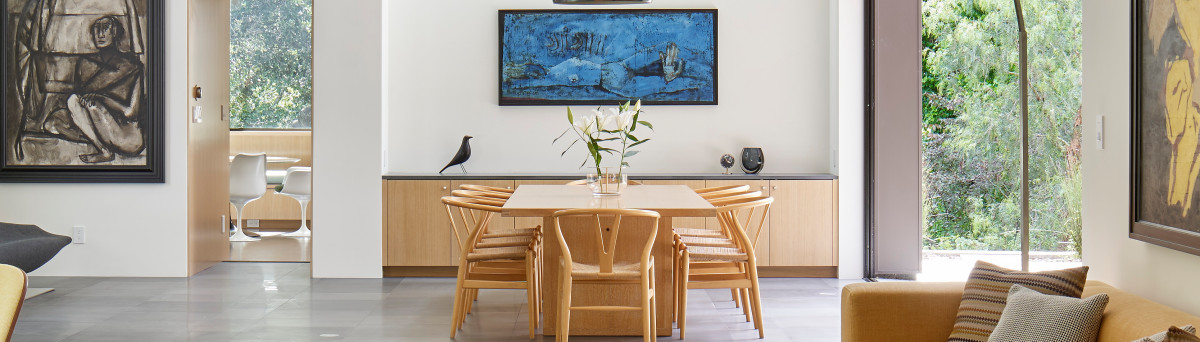
The second structure is the living room pavilion. Filled with natural light, this is the most formal and ceremonial area of the three and is set apart and rotated slightly from the other two, aligning the aspect with Mount Tamalpais as a way to convey its ceremonial role in the homeowner's life. The final structure, which is by far the largest, contains all the rooms and spaces required for every day living, and has a strong connection to the terraces and views.
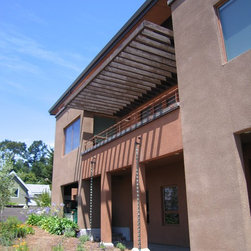
The exterior materials were selected to highlight the special qualities of the Bay Area, such as rough boards and rough stucco, which have a beautiful and rich appearance in the daylight.
The house is stunning, unique, and ideal for family living; a comfortable dwelling that will grow as the owners do.
The stunning views of downtown San Francisco , the Golden Gate Bridge, and Mount Tamalpais had to be the focus of any construction on the site. In addition, the interaction between the site and the home was well considered during the planning stage. To accomplish these objectives, the house is designed as three discrete structures that embrace the central knoll of the property in an 'L' structure.
The procession between these three structures is a journey from darkness to light, from limited views to wide vistas, and from compressed space to expansive volume. This succession of spaces is a reminder to the owners and visitors of the dynamic qualities of the site, with each structure intended for a distinct use. The first structure encountered upon approaching the home is the entry pavilion, squeezed between the other two structures, this area is dark and cool, recessed into the knoll an surrounded by plantings.
The second structure is the living room pavilion. Filled with natural light, this is the most formal and ceremonial area of the three and is set apart and rotated slightly from the other two, aligning the aspect with Mount Tamalpais as a way to convey its ceremonial role in the homeowner's life. The final structure, which is by far the largest, contains all the rooms and spaces required for every day living, and has a strong connection to the terraces and views.
The exterior materials were selected to highlight the special qualities of the Bay Area, such as rough boards and rough stucco, which have a beautiful and rich appearance in the daylight.
The house is stunning, unique, and ideal for family living; a comfortable dwelling that will grow as the owners do.
Country: United States
Others who worked on this project: David Duncan Livingston