

Decorating
Renovating
How to Design Garden Lighting That’s Good for You and Wildlife
Outdoor lighting can transform a garden, but it’s important to get it right for humans and wild creatures alike

With gardens becoming more and more important, and often acting as an extra ‘room’, it’s crucial to get outdoor lighting right. A good scheme will consider both the homeowner’s needs and the impact on local wildlife and ecosystems. Too much artificial light after dark can have a detrimental impact on the nocturnal habits of many species, but there’s a range of ways to ensure you light your garden safely for all.
Keen to find out more? We asked three wildlife and garden experts to share their knowledge and advice for lighting an outdoor space.
Professional advice from: Rebecca Smith of Rebecca Smith Garden Design & Consultancy; Alex Morss, Press & Communications Officer, Bat Conservation Trust; Falon Mihalic of Falon Land Studio
Keen to find out more? We asked three wildlife and garden experts to share their knowledge and advice for lighting an outdoor space.
Professional advice from: Rebecca Smith of Rebecca Smith Garden Design & Consultancy; Alex Morss, Press & Communications Officer, Bat Conservation Trust; Falon Mihalic of Falon Land Studio
Focus your lighting carefully
To reduce your impact on nocturnal species, start by considering if your outdoor lighting is essential for your use of the space. By fitting lights to highlight specific elements of your garden, rather than washing an entire outdoor area with light, you can start to reduce your impact.
“Be mindful of how you’re lighting your landscape,” Falon says. “Light with intention by selecting only the most important parts of the landscape to illuminate.”
Need help with your garden? Find a local garden designer on Houzz and read reviews from previous clients.
To reduce your impact on nocturnal species, start by considering if your outdoor lighting is essential for your use of the space. By fitting lights to highlight specific elements of your garden, rather than washing an entire outdoor area with light, you can start to reduce your impact.
“Be mindful of how you’re lighting your landscape,” Falon says. “Light with intention by selecting only the most important parts of the landscape to illuminate.”
Need help with your garden? Find a local garden designer on Houzz and read reviews from previous clients.
Point light sources downwards
“Spotlights and uplights are some of the most harmful light sources around the home, because they’re often high-glare and intense, and cast a very broad light,” Falon says.
Choosing downlights instead will help to reduce light pollution and further focus illumination on the areas that need it. “Fixtures with hoods and shields help to direct light onto the surfaces where it’s wanted and prevent it from being cast where it’s not necessary,” she says.
Rebecca Smith agrees, saying, “As much as I love the look of a silhouetted tree at night, I’d recommend only using downlights.”
“Spotlights and uplights are some of the most harmful light sources around the home, because they’re often high-glare and intense, and cast a very broad light,” Falon says.
Choosing downlights instead will help to reduce light pollution and further focus illumination on the areas that need it. “Fixtures with hoods and shields help to direct light onto the surfaces where it’s wanted and prevent it from being cast where it’s not necessary,” she says.
Rebecca Smith agrees, saying, “As much as I love the look of a silhouetted tree at night, I’d recommend only using downlights.”
Install low-level path lighting
Choosing low-level lighting to illuminate paths and steps can help to safely light the way while reducing the impact on the rest of the garden.
“Low-level path lighting is great and I love the Hunza Tier [which doesn’t project upwards] or Twig lights, which we’ve used really successfully in the past,” Rebecca says. “They simply and subtly light the way through from point A to point B.”
More: A Beginner’s Guide to Laying Out a Garden
Choosing low-level lighting to illuminate paths and steps can help to safely light the way while reducing the impact on the rest of the garden.
“Low-level path lighting is great and I love the Hunza Tier [which doesn’t project upwards] or Twig lights, which we’ve used really successfully in the past,” Rebecca says. “They simply and subtly light the way through from point A to point B.”
More: A Beginner’s Guide to Laying Out a Garden
Choose motion-activated lights
Rather than having outdoor lights on all evening, choosing motion-activated designs can reduce your environmental impact. “Most good motion detector lights can be set to stay on only briefly and only when something big goes past (it’s not fun if foxes or cats constantly set off a light, as this can cause neighbours to fall out),” Rebecca says.
Rather than having outdoor lights on all evening, choosing motion-activated designs can reduce your environmental impact. “Most good motion detector lights can be set to stay on only briefly and only when something big goes past (it’s not fun if foxes or cats constantly set off a light, as this can cause neighbours to fall out),” Rebecca says.
Use outdoor lights with timers
Alternatively, to reduce the amount of time garden lights are left on, look for ones with a timer function. This will have a double benefit of saving energy as well as reducing your impact on wildlife.
“There are also apps that allow you to control the lighting on your phone,” Rebecca says.
Alternatively, to reduce the amount of time garden lights are left on, look for ones with a timer function. This will have a double benefit of saving energy as well as reducing your impact on wildlife.
“There are also apps that allow you to control the lighting on your phone,” Rebecca says.
Use natural screening to further reduce light pollution
As well as considering your light source and type, Alex suggests designing natural screening into your garden to reduce the impact of light pollution.
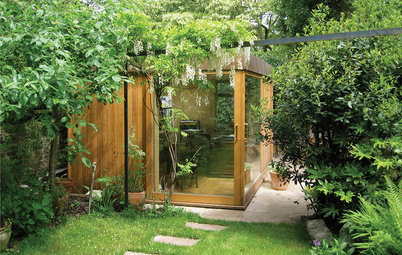
A pergola, trellis or hedge could all serve this purpose, with the greenery helping to contain and minimise the glare from your outdoor lighting. Creating outdoor ‘rooms’ like this one, with lighting tucked under a green ‘roof’, can also help to reduce light pollution.
More: How to Swap Your Fence for a Wildlife-friendly Hedge
As well as considering your light source and type, Alex suggests designing natural screening into your garden to reduce the impact of light pollution.
A pergola, trellis or hedge could all serve this purpose, with the greenery helping to contain and minimise the glare from your outdoor lighting. Creating outdoor ‘rooms’ like this one, with lighting tucked under a green ‘roof’, can also help to reduce light pollution.
More: How to Swap Your Fence for a Wildlife-friendly Hedge
Check if you need permission to install outdoor lighting
“A lot of areas are now designated as dark sky zones [the UK has the highest number of designated dark sky zones in the world], so before installing any lighting, it’s worth checking to see if your property is within this designation,” Rebecca says.
While outdoor lighting generally doesn’t require Planning Permission, you should still install it with care. And if your home is listed, make sure you consult your local planning authority.
You may also need to undertake a wildlife survey if listed species are present. British bats and their roosts, for example, are protected by law from disturbance or harm. Ask your designer to help undertake preliminary checks before you start any work.
“Science is still learning the full extent of how artificial lighting impacts on bats, other wildlife and people,” Alex says, “but there are ways we can avoid or reduce those impacts, for example by choosing a careful and minimal lighting design and following the best guidance.”
More detailed professional guidance on wildlife and artificial lighting can be found on the Bat Conservation Trust website.
More: How to Renovate or Extend Without Destroying Wildlife Habitats
Tell us…
Have you found this lighting guide useful? Let us know in the Comments.
“A lot of areas are now designated as dark sky zones [the UK has the highest number of designated dark sky zones in the world], so before installing any lighting, it’s worth checking to see if your property is within this designation,” Rebecca says.
While outdoor lighting generally doesn’t require Planning Permission, you should still install it with care. And if your home is listed, make sure you consult your local planning authority.
You may also need to undertake a wildlife survey if listed species are present. British bats and their roosts, for example, are protected by law from disturbance or harm. Ask your designer to help undertake preliminary checks before you start any work.
“Science is still learning the full extent of how artificial lighting impacts on bats, other wildlife and people,” Alex says, “but there are ways we can avoid or reduce those impacts, for example by choosing a careful and minimal lighting design and following the best guidance.”
More detailed professional guidance on wildlife and artificial lighting can be found on the Bat Conservation Trust website.
More: How to Renovate or Extend Without Destroying Wildlife Habitats
Tell us…
Have you found this lighting guide useful? Let us know in the Comments.

Sponsored
Reload the page to not see this specific ad anymore
Lighting an outdoor space can help you to enjoy it for longer into the evening, but using artificial lights after sundown can also contribute to nighttime light pollution, which in turn affects wildlife.
“Light pollution is an increasing problem for wildlife in the UK and globally,” Alex Morss says. “It can affect bat species’ roosting, foraging, navigating and migrating behaviours. It also affects their prey.”
“A concept called dark sky lighting is a movement to reduce light pollution produced by cities in order to protect wildlife and create more visible stars in the night sky,” Falon Mihalic says. “You can play a part in reducing light pollution by using recommended fixtures for wildlife friendliness and designing your lighting with care.”