

A Beginner’s Guide to Natural Stone Patios
Considering installing a stone patio? Get up to speed before you start with advice from our panel of experts

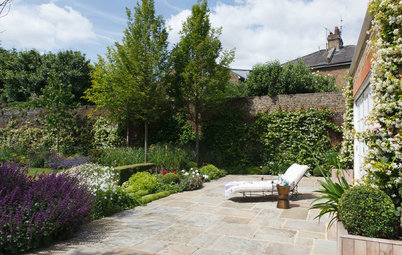
Timeless, beautiful and durable – natural stone is a great choice for any patio, whether in a traditional or contemporary garden. If you’re thinking of using this material in your own outdoor space, take a look at this expert guide to choosing, installing and maintaining a stone patio.
Professional advice from: Trevor Cains of High Standards; Richard Sneesby of Richard Sneesby Landscape Architects; James Porter of Harrington Porter
More in this series: A Beginner’s Guide to Brick Patios l A Beginner’s Guide to Porcelain Patios
Professional advice from: Trevor Cains of High Standards; Richard Sneesby of Richard Sneesby Landscape Architects; James Porter of Harrington Porter
More in this series: A Beginner’s Guide to Brick Patios l A Beginner’s Guide to Porcelain Patios
Another positive for stone is its versatility. “There are numerous different types of stone available, with different colours, textures and, most importantly, costs to suit different budgets,” James says.
Richard adds, “In addition to paving, stone can be cut to form steps and copings for walls, so the use of one material can unify the whole garden.”
Richard adds, “In addition to paving, stone can be cut to form steps and copings for walls, so the use of one material can unify the whole garden.”
What are the disadvantages of a natural stone patio?
When asked about the downsides of stone patio pavers, James says, “I can’t think of many.”
However, he does highlight the importance of expert installation, saying, “It’s probably not a job most people can do themselves, as you need the right tools, some of which can be dangerous in the wrong hands.”
When asked about the downsides of stone patio pavers, James says, “I can’t think of many.”
However, he does highlight the importance of expert installation, saying, “It’s probably not a job most people can do themselves, as you need the right tools, some of which can be dangerous in the wrong hands.”
Cost is another factor to consider. “Good-quality stone is more expensive than manufactured slabs,” Richard says. “Cheap stone is tempting, but it’s usually thin, weak and often porous, drawing cement through the slab, which stains the surface.”
Trevor also highlights the initial cost, but says, “Remember, with any type of stone, the product is only 20% of the cost – the rest is preparation and installation.”
So is there a more cost-effective option? “If you’re on a tight budget, you might be better using a good-quality concrete slab,” Richard says.
Trevor also highlights the initial cost, but says, “Remember, with any type of stone, the product is only 20% of the cost – the rest is preparation and installation.”
So is there a more cost-effective option? “If you’re on a tight budget, you might be better using a good-quality concrete slab,” Richard says.
How do you find the right type of stone for a patio?
A good starting point when deciding which type of stone to use is its locality.
“Try to use the same stone you see around you – in buildings, historic gardens and walls,” Richard says. “Stone is one of the most important materials to give areas local distinctiveness.
“Think about granite in Cornwall, golden limestone in the Cotswolds, or slate in the Lake District. If you can’t afford local stone, try to mimic its colour and geological type.”
He also emphasises provenance. “Stone can be imported with sometimes dubious credentials in terms of exploitation of labour,” he says. “Check your stone is fully certificated and has passed international standards for fair trade.”
Search for decking, patio and shed specialists in your area.
A good starting point when deciding which type of stone to use is its locality.
“Try to use the same stone you see around you – in buildings, historic gardens and walls,” Richard says. “Stone is one of the most important materials to give areas local distinctiveness.
“Think about granite in Cornwall, golden limestone in the Cotswolds, or slate in the Lake District. If you can’t afford local stone, try to mimic its colour and geological type.”
He also emphasises provenance. “Stone can be imported with sometimes dubious credentials in terms of exploitation of labour,” he says. “Check your stone is fully certificated and has passed international standards for fair trade.”
Search for decking, patio and shed specialists in your area.
What should influence the choice of stone?
Your choice of stone should be influenced by your particular property and garden, suggest our experts. “The type of stone should coordinate with the style of the house, as it’s an outside space of your home,” Trevor says.
James recommends you consider “the colours in the garden around where the new paving will go. Whether your house is red or yellow brick can influence your choice of colour in the paving. And if your garden is often in shade, go for a lighter colour.”
Richard says, “Bigger slabs give an illusion of space and high quality. They’re good for large areas and give a more contemporary feel.
“Smaller units are more appropriate in smaller gardens, where irregular sizes can often work,” he says. “But there are no hard and fast rules – you can mix sizes and even colours and textures.”
“If in doubt,” says James, “ask a supplier for advice and take some samples home with you. Stone always looks slightly different in natural light.”
Your choice of stone should be influenced by your particular property and garden, suggest our experts. “The type of stone should coordinate with the style of the house, as it’s an outside space of your home,” Trevor says.
James recommends you consider “the colours in the garden around where the new paving will go. Whether your house is red or yellow brick can influence your choice of colour in the paving. And if your garden is often in shade, go for a lighter colour.”
Richard says, “Bigger slabs give an illusion of space and high quality. They’re good for large areas and give a more contemporary feel.
“Smaller units are more appropriate in smaller gardens, where irregular sizes can often work,” he says. “But there are no hard and fast rules – you can mix sizes and even colours and textures.”
“If in doubt,” says James, “ask a supplier for advice and take some samples home with you. Stone always looks slightly different in natural light.”
How do you check for quality and strength?
“Not all stone is the same, even if it has the same name – sandstones and granites vary enormously,” Richard says. “Ask for samples and, even better, have a look at some finished projects that are at least two years’ old.”
He also advises, “Buy the thickest slabs you can afford. Thin slabs will lift after frost, crack and draw cement through from the bedding layer. You’ll pay more for regulated thickness, but they’re much easier to lay than varied thickness slabs.”
“Not all stone is the same, even if it has the same name – sandstones and granites vary enormously,” Richard says. “Ask for samples and, even better, have a look at some finished projects that are at least two years’ old.”
He also advises, “Buy the thickest slabs you can afford. Thin slabs will lift after frost, crack and draw cement through from the bedding layer. You’ll pay more for regulated thickness, but they’re much easier to lay than varied thickness slabs.”
Who should you hire to install your stone patio?
“All stone patios are only as good as the foundation provided for them, in terms of depth and materials,” says Trevor when asked about the best way to lay a stone patio.
When it comes to hiring a professional, he recommends, “Always ask to see examples of previous work and check their experience.”
James agrees. “Definitely get someone who knows what they’re doing, and don’t just go for the cheapest quote,” he says. “You don’t want your fitter to cut corners, such as not doing a sufficient sub-base, or not laying the slabs correctly with enough mortar below.
“When it’s not done correctly,” he says, “you’ll more often than not find the paving moves and sinks, and before long you’ll be getting someone to come and redo it.”
Richard adds, “Regular and accurate patterns also need to be professionally done, so all joints are the same and the lines are straight and parallel. Large slabs are heavy, and may require specialist equipment.”
“All stone patios are only as good as the foundation provided for them, in terms of depth and materials,” says Trevor when asked about the best way to lay a stone patio.
When it comes to hiring a professional, he recommends, “Always ask to see examples of previous work and check their experience.”
James agrees. “Definitely get someone who knows what they’re doing, and don’t just go for the cheapest quote,” he says. “You don’t want your fitter to cut corners, such as not doing a sufficient sub-base, or not laying the slabs correctly with enough mortar below.
“When it’s not done correctly,” he says, “you’ll more often than not find the paving moves and sinks, and before long you’ll be getting someone to come and redo it.”
Richard adds, “Regular and accurate patterns also need to be professionally done, so all joints are the same and the lines are straight and parallel. Large slabs are heavy, and may require specialist equipment.”
How do you prepare the groundwork?
The look and durability of your patio will be greatly affected by the quality of the ground beneath it, say our experts.
“The strength of your soil will influence how the slabs are laid,” Richard explains. “If [the soil is] newly laid or weak, and may settle over time, you may need a full concrete base, which can allow a thinner slab to be used [a bit like horizontal tiling].
“With a stronger sub-base, it may be possible to lay thicker slabs onto sand. This is especially good if you have irregular stone thicknesses, are using reclaimed slabs, or want to grow crevice plants in the joints.
“Anywhere a masonry approach can be adopted is a good place to use stone,” he adds. “I wouldn’t use stone or any other heavy material on wet or moving ground; there, a deck is a better option.”
The look and durability of your patio will be greatly affected by the quality of the ground beneath it, say our experts.
“The strength of your soil will influence how the slabs are laid,” Richard explains. “If [the soil is] newly laid or weak, and may settle over time, you may need a full concrete base, which can allow a thinner slab to be used [a bit like horizontal tiling].
“With a stronger sub-base, it may be possible to lay thicker slabs onto sand. This is especially good if you have irregular stone thicknesses, are using reclaimed slabs, or want to grow crevice plants in the joints.
“Anywhere a masonry approach can be adopted is a good place to use stone,” he adds. “I wouldn’t use stone or any other heavy material on wet or moving ground; there, a deck is a better option.”
Should natural stone pavers be sealed?
There’s no need to seal natural stone, and in fact Trevor advises against it. “Don’t seal a natural stone patio, as this traps moisture, which will damage the surface in extreme temperatures,” he says.
However, James points out that it might be worth sealing sandstone. “It’s quite porous compared to other materials, so dirt and water tends to penetrate deeper, making it harder to clean.”
There’s no need to seal natural stone, and in fact Trevor advises against it. “Don’t seal a natural stone patio, as this traps moisture, which will damage the surface in extreme temperatures,” he says.
However, James points out that it might be worth sealing sandstone. “It’s quite porous compared to other materials, so dirt and water tends to penetrate deeper, making it harder to clean.”
What’s the best way to keep a stone patio clean?
Maintenance of your stone patio should be fairly straightforward, agree our experts, as long as you’re careful.
Richard says, “In dry areas, most stone can simply be swept clean. In wetter parts of the country, and in shady areas, some algae may develop, which can get slippery. As long as the joints are done properly, this can be pressure-washed.”
“Be careful not to remove the aged patina, which is often the whole point of choosing stone,” he adds. “Some products are available that are very good at cleaning stone, but not good for the surrounding vegetation or pets, as they can be toxic.”
James agrees, and says, “If it’s particularly dirty, we sometimes use special detergents that are not harmful to plants, and sometimes we use a steam pressure washer.”
Tell us…
Are you considering natural stone for you patio, or do you already have it in your garden? Share your thoughts and ideas in the Comments section.
Maintenance of your stone patio should be fairly straightforward, agree our experts, as long as you’re careful.
Richard says, “In dry areas, most stone can simply be swept clean. In wetter parts of the country, and in shady areas, some algae may develop, which can get slippery. As long as the joints are done properly, this can be pressure-washed.”
“Be careful not to remove the aged patina, which is often the whole point of choosing stone,” he adds. “Some products are available that are very good at cleaning stone, but not good for the surrounding vegetation or pets, as they can be toxic.”
James agrees, and says, “If it’s particularly dirty, we sometimes use special detergents that are not harmful to plants, and sometimes we use a steam pressure washer.”
Tell us…
Are you considering natural stone for you patio, or do you already have it in your garden? Share your thoughts and ideas in the Comments section.

Sponsored
Reload the page to not see this specific ad anymore
Our experts all agree that one of the major selling points of natural stone patio pavers is their durability. “If done properly, a stone patio will last for a long time,” James Porter says.
Richard Sneesby agrees. “Stone looks better with age, whereas manufactured materials nearly always look worse. Scratches, scuffs and even small cracks can still look good, giving the stone an aged patina.”
Trevor Cains adds, “Natural stone keeps its good looks for longer and is not as susceptible to lichen and moss growth. These can ruin the look of a patio, and are a health and safety issue due to how slippery they are.”