
Renovating
Decorating
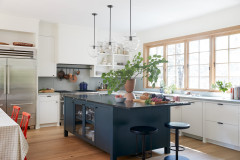
How Can I Plan the Perfect Kitchen Storage?
From larders and pan drawers to space for your washing machine, kitchens rely on effective storage to function. So how do you get it right?

Kitchens in today’s homes have to fulfil a great many requirements. They are the place for preparing and cooking our meals, but we often want to be able to eat, work or relax in this room, too.
For all this to happen smoothly, the kitchen has to be planned cleverly and plenty of effective storage is crucial. But when installing a new kitchen, how do you get the storage right? How much do you need, where should it go and which kind works best? As part of our Kitchen Planning guide, three experts share their savvy kitchen storage advice.
Professional advice from: Kashi Shikunova of Yam Studios; Lindsey Durrant of Burlanes Interiors; Conor Laville of Wren Kitchens
More in this series: Kitchen Cupboards; Kitchen Worktops; Kitchen Flooring; Kitchen Sinks
Beginning your kitchen project? Read How to Start a Kitchen Renovation
For all this to happen smoothly, the kitchen has to be planned cleverly and plenty of effective storage is crucial. But when installing a new kitchen, how do you get the storage right? How much do you need, where should it go and which kind works best? As part of our Kitchen Planning guide, three experts share their savvy kitchen storage advice.
Professional advice from: Kashi Shikunova of Yam Studios; Lindsey Durrant of Burlanes Interiors; Conor Laville of Wren Kitchens
More in this series: Kitchen Cupboards; Kitchen Worktops; Kitchen Flooring; Kitchen Sinks
Beginning your kitchen project? Read How to Start a Kitchen Renovation
Be realistic
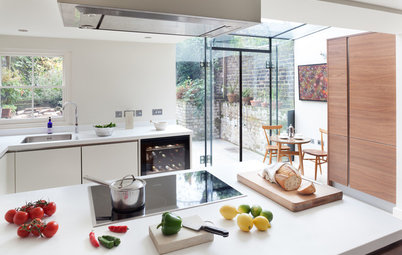
While fitting lots of storage into a kitchen is a sensible goal, be sure not to overcrowd the space.
“People often want an island or at least a breakfast bar, but it sometimes doesn’t work in the space,” Lindsey says. “Think about how you’re going to be able to move around the room. Be realistic about what will fit. If you’re spending money on a new kitchen, you don’t want a design you can’t move around easily or a space that looks crowded or over-stuffed.”
More: 10 Essential Kitchen Dimensions You Need to Know
While fitting lots of storage into a kitchen is a sensible goal, be sure not to overcrowd the space.
“People often want an island or at least a breakfast bar, but it sometimes doesn’t work in the space,” Lindsey says. “Think about how you’re going to be able to move around the room. Be realistic about what will fit. If you’re spending money on a new kitchen, you don’t want a design you can’t move around easily or a space that looks crowded or over-stuffed.”
More: 10 Essential Kitchen Dimensions You Need to Know
Calculate the space
Every kitchen is different, as are the needs of the people using it, but each kitchen will need a certain amount of storage.
“A tall larder is really helpful for storing fresh food,” Conor says. “Then add in two standard cutlery drawers and four pan drawers – that’s a good place to start.”
Keep an eye on the long term, too. “When designing your kitchen, consider today and tomorrow. A family of four can turn into a family of five or six,” he says. “It’s good to allow storage space for everyone. Ideally, allow two cupboards for each adult and one each for everyone else.”
More: How to Choose a Kitchen Designer
Every kitchen is different, as are the needs of the people using it, but each kitchen will need a certain amount of storage.
“A tall larder is really helpful for storing fresh food,” Conor says. “Then add in two standard cutlery drawers and four pan drawers – that’s a good place to start.”
Keep an eye on the long term, too. “When designing your kitchen, consider today and tomorrow. A family of four can turn into a family of five or six,” he says. “It’s good to allow storage space for everyone. Ideally, allow two cupboards for each adult and one each for everyone else.”
More: How to Choose a Kitchen Designer
Don’t forget some drawers
Drawers are much easier to use than standard cupboards, which can be hard to access and can easily become cluttered.
“Drawers bring everything to you, so you’re not grovelling around on your hands and knees to reach things at the back,” Lindsey says. “Ensure they have quality runners. Good drawers can now take up to 35kg distributed weight, so they are very practical.” Position some close to the dishwasher, too. “It’s great to be able to empty everything straight into a drawer,” adds Lindsey.
“It’s good to have a mix of drawers and cupboards,” Kashi says. “Drawers cost a little more than standard cupboards so, in a big kitchen, fitting lots of them could push up your budget.”
If you don’t like the appearance of drawers and prefer a more minimal look, they can be concealed behind cupboard doors. “This gives a uniform look to kitchen storage,” she says.
When it comes to planning the individual drawers, think about what you’ll store in them. For a utensil drawer, for instance, factor in the biggest pieces you’re likely to keep in there. “It’s vital to consider the size of things such as spatulas and mallets when planning drawer sizes and depths,” Conor says.
Drawers are much easier to use than standard cupboards, which can be hard to access and can easily become cluttered.
“Drawers bring everything to you, so you’re not grovelling around on your hands and knees to reach things at the back,” Lindsey says. “Ensure they have quality runners. Good drawers can now take up to 35kg distributed weight, so they are very practical.” Position some close to the dishwasher, too. “It’s great to be able to empty everything straight into a drawer,” adds Lindsey.
“It’s good to have a mix of drawers and cupboards,” Kashi says. “Drawers cost a little more than standard cupboards so, in a big kitchen, fitting lots of them could push up your budget.”
If you don’t like the appearance of drawers and prefer a more minimal look, they can be concealed behind cupboard doors. “This gives a uniform look to kitchen storage,” she says.
When it comes to planning the individual drawers, think about what you’ll store in them. For a utensil drawer, for instance, factor in the biggest pieces you’re likely to keep in there. “It’s vital to consider the size of things such as spatulas and mallets when planning drawer sizes and depths,” Conor says.
Access awkward spaces
It can be hard to keep a deep, standard cupboard tidy or reach items stored at the back, but there are ways to make cupboards more efficient.
“A rotation or pull-out shelf allows full access to the back of the cupboard,” Conor says. “These can be expensive, though. By using baskets or boxes you can achieve a similar effect and keep storage tidy.” Baskets can also be used to slot into narrow spaces that would not fit a full drawer unit.
Ready to get started? Find a local kitchen designer on Houzz and read reviews from previous clients.
It can be hard to keep a deep, standard cupboard tidy or reach items stored at the back, but there are ways to make cupboards more efficient.
“A rotation or pull-out shelf allows full access to the back of the cupboard,” Conor says. “These can be expensive, though. By using baskets or boxes you can achieve a similar effect and keep storage tidy.” Baskets can also be used to slot into narrow spaces that would not fit a full drawer unit.
Ready to get started? Find a local kitchen designer on Houzz and read reviews from previous clients.
Integrate your bins
Don’t forget to factor in storage for waste. “Always add built-in bins,” Kashi says. “Some people need more bin space than others – for example, if you’re a big family and don’t want to be taking the rubbish out every five minutes.”
Design a dedicated cupboard for waste and recycling bins, or use dead space elsewhere in the kitchen. “It’s a good idea to install bins under the sink, which is often a dead space that’s difficult to use,” Kashi says. “You can also fit corner mechanisms for waste storage that make use of hard-to-reach corner space under worktops.”
Don’t forget to factor in storage for waste. “Always add built-in bins,” Kashi says. “Some people need more bin space than others – for example, if you’re a big family and don’t want to be taking the rubbish out every five minutes.”
Design a dedicated cupboard for waste and recycling bins, or use dead space elsewhere in the kitchen. “It’s a good idea to install bins under the sink, which is often a dead space that’s difficult to use,” Kashi says. “You can also fit corner mechanisms for waste storage that make use of hard-to-reach corner space under worktops.”
Know the shelving pros and cons
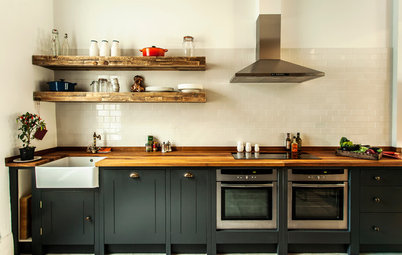
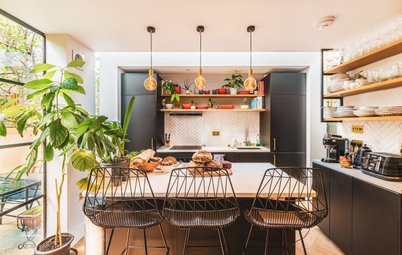
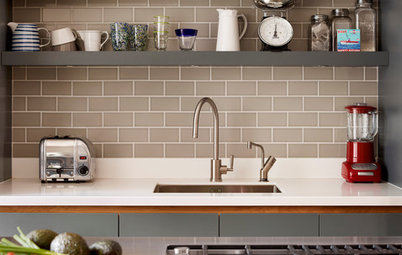
Adding some open shelving to your kitchen will not radically boost its storage, but it can help to soften up the appearance of a space kitted out largely with cupboards and drawers.
“It can be nice to have just a few shelves to display good-looking items or cookery books,” Kashi says, “but remember that they don’t make very efficient use of space. If you have a small kitchen and need storage, it might be best to avoid them and install normal wall cupboards instead.”
Shelving can also look messy. “Open shelving is for the tidy minded!” Lindsey says. “You will also need to think about whether it matches the cupboards or not, and if it’s painted, it may get scuffed and marked with use.”
Items stored on open shelves in a kitchen may also need to be cleaned frequently, because of grime and grease from cooking. “A good extractor fan should help,” Kashi says, “but it can be irritating to have to clean items on shelving regularly and the shelves can look messy.”
More: Wall Units, Shelves or Nothing: Which is Best for Your Kitchen?
Adding some open shelving to your kitchen will not radically boost its storage, but it can help to soften up the appearance of a space kitted out largely with cupboards and drawers.
“It can be nice to have just a few shelves to display good-looking items or cookery books,” Kashi says, “but remember that they don’t make very efficient use of space. If you have a small kitchen and need storage, it might be best to avoid them and install normal wall cupboards instead.”
Shelving can also look messy. “Open shelving is for the tidy minded!” Lindsey says. “You will also need to think about whether it matches the cupboards or not, and if it’s painted, it may get scuffed and marked with use.”
Items stored on open shelves in a kitchen may also need to be cleaned frequently, because of grime and grease from cooking. “A good extractor fan should help,” Kashi says, “but it can be irritating to have to clean items on shelving regularly and the shelves can look messy.”
More: Wall Units, Shelves or Nothing: Which is Best for Your Kitchen?
Love a larder
“Larders are particularly great for people who cook a lot and have many ingredients they need to access all the time,” Kashi. says “You don’t want to have things such as spices out on a worktop, but they can get lost in a cupboard. In a larder, though, they are easy to find.”
Larders can also be a useful addition in a small kitchen. “They make quite efficient use of space,” she says. “They can be designed to be narrower than a standard 600mm unit, so if you have a random, awkward space in your kitchen, fitting a larder in it can be a great storage solution.”
“Larders are particularly great for people who cook a lot and have many ingredients they need to access all the time,” Kashi. says “You don’t want to have things such as spices out on a worktop, but they can get lost in a cupboard. In a larder, though, they are easy to find.”
Larders can also be a useful addition in a small kitchen. “They make quite efficient use of space,” she says. “They can be designed to be narrower than a standard 600mm unit, so if you have a random, awkward space in your kitchen, fitting a larder in it can be a great storage solution.”
Plan inside
Lindsey advises fitting drawers at the bottom of a larder. “This is dead space and you don’t want to be on your hands and knees trying to reach things at the back,” she says. “Fit drawers here, adjustable shelving above and perhaps a shelf for the toaster or microwave inside, too.” The inside of the larder door can then be fitted with racks for small jars and bottles.
Lindsey advises fitting drawers at the bottom of a larder. “This is dead space and you don’t want to be on your hands and knees trying to reach things at the back,” she says. “Fit drawers here, adjustable shelving above and perhaps a shelf for the toaster or microwave inside, too.” The inside of the larder door can then be fitted with racks for small jars and bottles.
Store small appliances
Clear worktops with minimal clutter on them is a goal for many of us. But storing small appliances such as food mixers in cupboards can turn getting them out and using them into an inconvenient hassle. So if space allows, factor in storage for gadgets that you use fairly often.
“We like to create storage for small appliances, such as food processors and toasters,” Kashi says. “They can be stored all set up, plugged into a socket in the back wall and ready to use, then easily shut away afterwards.”
Clear worktops with minimal clutter on them is a goal for many of us. But storing small appliances such as food mixers in cupboards can turn getting them out and using them into an inconvenient hassle. So if space allows, factor in storage for gadgets that you use fairly often.
“We like to create storage for small appliances, such as food processors and toasters,” Kashi says. “They can be stored all set up, plugged into a socket in the back wall and ready to use, then easily shut away afterwards.”
Go outside the storage box
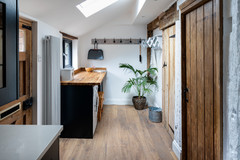
In a kitchen, storage does not have to be simply for food or large appliances, such as dishwashers. It can be made to house an additional sink, clothes-drying space, an ironing board, shoes or coats. If space allows, you can contain a huge range of kit and clobber in your kitchen storage.
In a kitchen, storage does not have to be simply for food or large appliances, such as dishwashers. It can be made to house an additional sink, clothes-drying space, an ironing board, shoes or coats. If space allows, you can contain a huge range of kit and clobber in your kitchen storage.
Consider the latest kit
Think about incorporating storage that’s not the typical cupboard or drawer. Wine coolers, for example, are popular and very helpful.
“Ambient coolers allow you to set different temperatures within the appliance for red and white wine, so including one in your kitchen means you can get rid of any wine racks,” Lindsey says. “It also means no bottles in the fridge, which frees up space there.”
Think about incorporating storage that’s not the typical cupboard or drawer. Wine coolers, for example, are popular and very helpful.
“Ambient coolers allow you to set different temperatures within the appliance for red and white wine, so including one in your kitchen means you can get rid of any wine racks,” Lindsey says. “It also means no bottles in the fridge, which frees up space there.”
Make a minimal kitchen look inviting
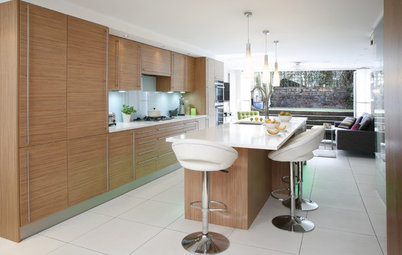
If your ideal is banks of streamlined storage in the kitchen, think about ways to prevent this from appearing austere. “Play with texture, avoid flat colour and find materials that contain slight variations in tone,” Kashi says.
Think about lighting, too. “If you don’t extend cupboards right up to the ceiling you can then fit recessed lighting above,” she says. “This creates really useful light, but also a warm atmosphere.”
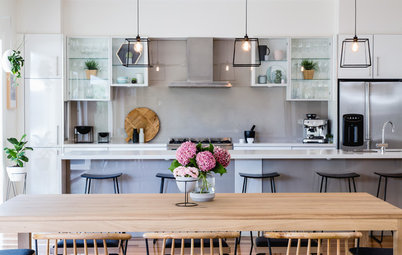
Doors with glass insets will also break up the minimal appearance of a run of units, but be sure you have enough good-looking pieces to store inside, as everything will be on show.
Tell us…
Share your kitchen storage tips and experiences in the Comments.
If your ideal is banks of streamlined storage in the kitchen, think about ways to prevent this from appearing austere. “Play with texture, avoid flat colour and find materials that contain slight variations in tone,” Kashi says.
Think about lighting, too. “If you don’t extend cupboards right up to the ceiling you can then fit recessed lighting above,” she says. “This creates really useful light, but also a warm atmosphere.”
Doors with glass insets will also break up the minimal appearance of a run of units, but be sure you have enough good-looking pieces to store inside, as everything will be on show.
Tell us…
Share your kitchen storage tips and experiences in the Comments.

Sponsored
Reload the page to not see this specific ad anymore
Before planning any storage, think about how you use the kitchen and what you need from it. “The amount of storage needed depends on the person or family using the space,” Kashi Shikunova says. “Do you cook a lot? Do you need frequent access to lots of different ingredients, such as spices? Are you a family? Think about this and then see how this can be accommodated into the space.”
Lindsey Durrant agrees. “Work out what’s really important to you,” she says. “Is it major storage? Do you dislike having anything out on the worktop? Then focus on the available space.”
“It’s essential to the design process to have a full understanding of your needs and wants,” Conor Laville says. “Ultimately, the needs have to come first. Take a look at what you have currently while also considering what you might want to include for the years to come.”