




Where to Spend and Where to Save When Renovating Sustainably
Want to create a greener home but have a tight budget? Our experts suggest where to direct your cash for maximum benefit

Planning a renovation can be the perfect opportunity to make more sustainable choices, from choosing planet-friendly materials to conserving energy. However, it can also be hard to know where to direct your money, especially if expenses are mounting up.
We asked three experts what to spend and save on in order to create a more environmentally friendly home.
Professional advice from: Cat Hoad of Absolute Project Management; Yoko Kloeden of Yoko Kloeden Design; Amanda Delaney of Decorbuddi
We asked three experts what to spend and save on in order to create a more environmentally friendly home.
Professional advice from: Cat Hoad of Absolute Project Management; Yoko Kloeden of Yoko Kloeden Design; Amanda Delaney of Decorbuddi
Save on: Large glazing panels
With warmer summers and the climate crisis, extensions that feature a lot of glazing can sometimes draw in too much heat, Yoko Kloeden says – so think before you commit. “We have many projects where clients ask us to ‘do something’ about the heat in their glass box extension,” she says.
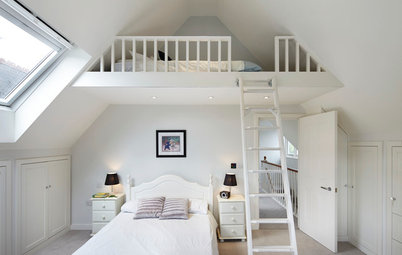
Even skylights can lead to greenhouse-like rooms, so Yoko also recommends saving on large glazing panels and instead spending on roof window blinds to control the light levels. “Position roof lights carefully according to where the sun hits in particular seasons,” she says.
“One downside of a well-insulated home is it gets very warm in summer,” Yoko adds. She recommends planning good air circulation as part of any sustainable building renovations. This will save you money on unnecessary air conditioning, which, she says, “should be avoided unless your energy source is from 100% renewable energy”.
Find a range of renovation pros in the Houzz Professionals Directory.
With warmer summers and the climate crisis, extensions that feature a lot of glazing can sometimes draw in too much heat, Yoko Kloeden says – so think before you commit. “We have many projects where clients ask us to ‘do something’ about the heat in their glass box extension,” she says.
Even skylights can lead to greenhouse-like rooms, so Yoko also recommends saving on large glazing panels and instead spending on roof window blinds to control the light levels. “Position roof lights carefully according to where the sun hits in particular seasons,” she says.
“One downside of a well-insulated home is it gets very warm in summer,” Yoko adds. She recommends planning good air circulation as part of any sustainable building renovations. This will save you money on unnecessary air conditioning, which, she says, “should be avoided unless your energy source is from 100% renewable energy”.
Find a range of renovation pros in the Houzz Professionals Directory.
Spend on: Eco paints
These days, non-toxic paints come in a range of beautiful shades and finishes. “Eco paints are almost always more expensive, but there are arguably lots of health benefits from using natural ingredients and eliminating off-gassing,” Cat says.
Off-gassing is where substances gradually release noxious, harmful chemicals, such as those emitted from paints containing volatile organic compounds (VOCs). Eco paints are made from organic materials that are less harmful to both the environment and human health, so are worth the investment if you can stretch to them.
These days, non-toxic paints come in a range of beautiful shades and finishes. “Eco paints are almost always more expensive, but there are arguably lots of health benefits from using natural ingredients and eliminating off-gassing,” Cat says.
Off-gassing is where substances gradually release noxious, harmful chemicals, such as those emitted from paints containing volatile organic compounds (VOCs). Eco paints are made from organic materials that are less harmful to both the environment and human health, so are worth the investment if you can stretch to them.
Save on: New furniture
Rather than unthinkingly throwing out or giving away well-loved existing furniture, consider whether it could be upcycled.
“Reupholstering tired seating is always recommended,” Yoko says. A bright fabric can give a whole new lease of life to an old piece with a good-quality frame. While [hiring] an upholsterer can sometimes seem as expensive as buying new, you’ll often benefit from retaining old pieces made with far better quality workmanship, and avoid items going into landfill.
If you do need to buy something new, take the time to think about the provenance, Cat advises. “Where possible, look for products made from materials that are both renewable and easily recyclable,” she says. “Investigate fittings and furniture made from timber, ceramics, glass, linen, recycled fabrics and organic materials.” Some metals may also be recycled or recyclable.
“Avoid plastics and materials made from fossil fuels, especially ‘virgin’ plastics that are not made from recycled plastic and those manufactured in a way that makes recycling difficult or impossible,” she adds.
Rather than unthinkingly throwing out or giving away well-loved existing furniture, consider whether it could be upcycled.
“Reupholstering tired seating is always recommended,” Yoko says. A bright fabric can give a whole new lease of life to an old piece with a good-quality frame. While [hiring] an upholsterer can sometimes seem as expensive as buying new, you’ll often benefit from retaining old pieces made with far better quality workmanship, and avoid items going into landfill.
If you do need to buy something new, take the time to think about the provenance, Cat advises. “Where possible, look for products made from materials that are both renewable and easily recyclable,” she says. “Investigate fittings and furniture made from timber, ceramics, glass, linen, recycled fabrics and organic materials.” Some metals may also be recycled or recyclable.
“Avoid plastics and materials made from fossil fuels, especially ‘virgin’ plastics that are not made from recycled plastic and those manufactured in a way that makes recycling difficult or impossible,” she adds.
Spend on: LED light bulbs
“An easy win in any home renovation project is replacing [halogen or incandescent] light bulbs with LED ones,” Amanda says.
LED bulbs use as much as 90% less energy than an equally bright halogen or incandescent light. “Just changing to LED versions will achieve a longer life and greater energy efficiency,” she says.
Cat also suggests you consider an automated system, so you can remotely turn off lights when you’re not there, or can remotely put them off and on if you need to for security reasons.
“You can also put some lights on sensor systems,” she says, “for example, [in] your utility room or wardrobe, so they automatically turn off when there’s no one in the area.”
“An easy win in any home renovation project is replacing [halogen or incandescent] light bulbs with LED ones,” Amanda says.
LED bulbs use as much as 90% less energy than an equally bright halogen or incandescent light. “Just changing to LED versions will achieve a longer life and greater energy efficiency,” she says.
Cat also suggests you consider an automated system, so you can remotely turn off lights when you’re not there, or can remotely put them off and on if you need to for security reasons.
“You can also put some lights on sensor systems,” she says, “for example, [in] your utility room or wardrobe, so they automatically turn off when there’s no one in the area.”
Save on: All-new building materials
Reusing building materials rather than throwing them away, or sourcing recycled elements such as bricks and timber, can save both money and resources.
“Rather than replacing wooden flooring, for example, explore re-sanding and repairing,” Amanda suggests, saying that using what you have is even more economical and sustainable than using reclaimed or sustainably sourced new products. Remember, though, that existing flooring might need to be retrofitted with insulation.
However, Yoko sounds a note of caution. “If you’re willing to spend more by reusing materials from old buildings, make sure your contractor is happy from the beginning. They will probably be used to installing new materials and are often nervous of the unpredictability of reusing salvaged materials. You need to have them on board from the beginning, otherwise it could be a painful journey.”
If you can’t recycle or revive existing flooring, Yoko suggests you invest in good-quality timber flooring from a sustainable source. “This ages well compared to man-made materials and will last for decades with maintenance,” she says.
Reusing building materials rather than throwing them away, or sourcing recycled elements such as bricks and timber, can save both money and resources.
“Rather than replacing wooden flooring, for example, explore re-sanding and repairing,” Amanda suggests, saying that using what you have is even more economical and sustainable than using reclaimed or sustainably sourced new products. Remember, though, that existing flooring might need to be retrofitted with insulation.
However, Yoko sounds a note of caution. “If you’re willing to spend more by reusing materials from old buildings, make sure your contractor is happy from the beginning. They will probably be used to installing new materials and are often nervous of the unpredictability of reusing salvaged materials. You need to have them on board from the beginning, otherwise it could be a painful journey.”
If you can’t recycle or revive existing flooring, Yoko suggests you invest in good-quality timber flooring from a sustainable source. “This ages well compared to man-made materials and will last for decades with maintenance,” she says.
Spend on: Renewable heating
If you’re renovating, want to aim for net zero, and have the budget, it could be worth installing a renewable energy system.
“Renewable heating systems generally come in the form of solar panels, whether on the roof or in your garden, or air or ground source heat pumps,” Amanda says. “Heating produces an enormous amount of carbon dioxide and if your house is sufficiently insulated, retro-fitting renewable heat systems becomes more viable.”
“Where exterior space is limited,” Cat says, “air source heat pumps are a great option and can provide passive cooling, though they’re currently expensive to buy and fit and don’t work for all buildings. They also require good levels of insulation, as they generally achieve lower temperatures, so it’s important to conserve the energy that’s produced.
“Where exterior space is plentiful,” she continues, “ground source heat pumps can also work well, though again they aren’t cheap.”
However, one bonus is that sometimes you can sell electricity back to the grid. Search for the government-backed Smart Export Guarantee (SEG), which pays homes and businesses for excess renewable electricity.
And with solar panels, British Gas estimates you can save £700 a year on bills if you combine the panels with batteries to store energy for later use.
Can’t afford a whole new heating system? There are other ways to save energy. “Spend on a thermostat,” Cat says. “Systems such as Nest are not particularly expensive to fit and generally simple to use and effective in not having the heating on when you aren’t there.”
More: Should You Install an Air Source Heat Pump?
If you’re renovating, want to aim for net zero, and have the budget, it could be worth installing a renewable energy system.
“Renewable heating systems generally come in the form of solar panels, whether on the roof or in your garden, or air or ground source heat pumps,” Amanda says. “Heating produces an enormous amount of carbon dioxide and if your house is sufficiently insulated, retro-fitting renewable heat systems becomes more viable.”
“Where exterior space is limited,” Cat says, “air source heat pumps are a great option and can provide passive cooling, though they’re currently expensive to buy and fit and don’t work for all buildings. They also require good levels of insulation, as they generally achieve lower temperatures, so it’s important to conserve the energy that’s produced.
“Where exterior space is plentiful,” she continues, “ground source heat pumps can also work well, though again they aren’t cheap.”
However, one bonus is that sometimes you can sell electricity back to the grid. Search for the government-backed Smart Export Guarantee (SEG), which pays homes and businesses for excess renewable electricity.
And with solar panels, British Gas estimates you can save £700 a year on bills if you combine the panels with batteries to store energy for later use.
Can’t afford a whole new heating system? There are other ways to save energy. “Spend on a thermostat,” Cat says. “Systems such as Nest are not particularly expensive to fit and generally simple to use and effective in not having the heating on when you aren’t there.”
More: Should You Install an Air Source Heat Pump?
Save on: Excess water use
Rather than installing a new shower, consider fitting a water-saving device to an existing one instead to save both money and energy.
“If you can, fit one to your tap or showerhead,” Cat says. “But also be mindful about turning the tap on – use cold water to rinse things unless warm is essential, put only the amount of water you need in a kettle or saucepan, and don’t have water (especially hot water) running when washing your face or brushing your teeth.”
Tell us…
Have you renovated your home? What sustainable measures did you take? Share your tips in the Comments.
Rather than installing a new shower, consider fitting a water-saving device to an existing one instead to save both money and energy.
“If you can, fit one to your tap or showerhead,” Cat says. “But also be mindful about turning the tap on – use cold water to rinse things unless warm is essential, put only the amount of water you need in a kettle or saucepan, and don’t have water (especially hot water) running when washing your face or brushing your teeth.”
Tell us…
Have you renovated your home? What sustainable measures did you take? Share your tips in the Comments.



Sponsored
Reload the page to not see this specific ad anymore
For Amanda Delaney, insulation is the number one priority. “In my opinion, insulation makes the biggest impact in the home,” she says. “If your property isn’t insulated effectively, it doesn’t matter if you’re using renewable energy or not, as most of it will be escaping.”
Also look into replacing single-glazed or ill-fitting windows. “10% of a home’s energy can be lost through inefficient windows,” Amanda says. “We advise clients to look at options for improving efficiency, from a simple upgrade to full replacement with double- or triple-glazed specialist glass.”
Don’t have the budget for a full insulation upgrade? “Even if you’re just doing one area – one insulated wall in a renovated bedroom or a double-glazed window – it’s worth doing,” Cat Hoad says. “It will save on energy bills, reduce your carbon emissions and make the room much more enjoyable to live in.
“Placing insulating strips around ill-fitting doors and windows is a lower-cost option than replacing,” she adds. “It will have less effect, but is still worth doing.”
More: How to Retrofit Insulation in an Existing Property