
Renovating

How to Save Water in the Bathroom
Reduce your water use with these top tips from bathroom professionals

Drier summers have shone a light on how precious a resource water is, and how important it is to save it in our homes. So what steps can we all take to reduce water consumption in our bathrooms? As part of our Sustainable Renovation Planning guide, we asked three experts for their insights on everything from toilet flushes to water-saving showers.
Professional advice from: Adam Wollerton of Bathroom Eleven; James Lentaigne of Drummonds Bathrooms; Sara Levy of Sara Levy Designs
Professional advice from: Adam Wollerton of Bathroom Eleven; James Lentaigne of Drummonds Bathrooms; Sara Levy of Sara Levy Designs
Choose a different bath
Showers typically use less water than baths: 62 litres for an average 8 minute shower vs 80 litres for a bath, according to research by Unilever.
Can’t bear to give up your relaxing soak? “Choose a shallower bath or one that gives you the option to install a lower overflow,” Adam Wollerton says. You can buy baths where the overflow has yet to be drilled.
Having a smaller bath is another option. “One of the most popular baths we offer is available in a 1580mm (rather than 1700mm) length, and has taller sides,” Adam says. “Shaving off 120mm saves approximately 10 litres of water per bath (the 1580mm-length bath has a 180 litre capacity; the 1700mm has a 190 litre capacity).”
Sara agrees. “There are so many new shapes out there, it may not be necessary to choose the largest bath for your room,” she says. “A clever designer will help to make the best use of the space.”
Consider, too, an acrylic bath that keeps water warmer for longer. “This will reduce the temptation to keep topping up with hot water,” Adam says.
In an existing bath, tweak your habits. “Only fill the bath as high as you need,” Sara says.
If you’re a shower person, the other option is to get rid of your bath altogether. But remember, some power showers consume more water than baths – investigate how much your chosen model uses.
Showers typically use less water than baths: 62 litres for an average 8 minute shower vs 80 litres for a bath, according to research by Unilever.
Can’t bear to give up your relaxing soak? “Choose a shallower bath or one that gives you the option to install a lower overflow,” Adam Wollerton says. You can buy baths where the overflow has yet to be drilled.
Having a smaller bath is another option. “One of the most popular baths we offer is available in a 1580mm (rather than 1700mm) length, and has taller sides,” Adam says. “Shaving off 120mm saves approximately 10 litres of water per bath (the 1580mm-length bath has a 180 litre capacity; the 1700mm has a 190 litre capacity).”
Sara agrees. “There are so many new shapes out there, it may not be necessary to choose the largest bath for your room,” she says. “A clever designer will help to make the best use of the space.”
Consider, too, an acrylic bath that keeps water warmer for longer. “This will reduce the temptation to keep topping up with hot water,” Adam says.
In an existing bath, tweak your habits. “Only fill the bath as high as you need,” Sara says.
If you’re a shower person, the other option is to get rid of your bath altogether. But remember, some power showers consume more water than baths – investigate how much your chosen model uses.
Adjust your basin
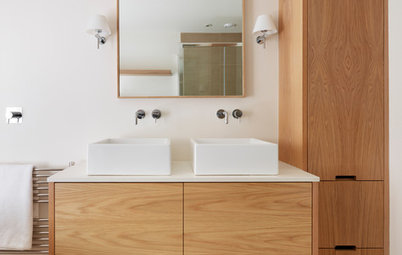
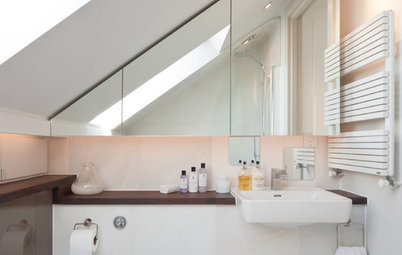
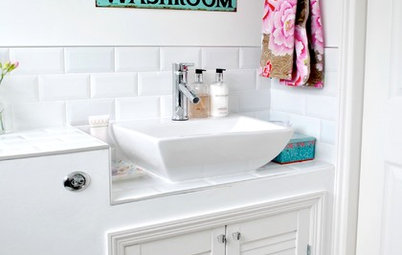
If you tend to fill up your basin for face washing or wet shaves, Adam recommends a smaller bowl. “It will fill quicker and use less water than a wider or larger basin,” he says. “Could you opt for a smaller basin with some worktop space around it for everyday lotions and potions?”
Do you have children who repeatedly leave the tap on, however many times you remind them? “Using a sensor tap on the sink will allow you to only use the water when you need it,” Sara says.
James adds, “Don’t forget a good plug or pop-up waste – this can help you to avoid water literally going down the drain.”
Check out photos of projects by bathroom designers in your area and read reviews from previous clients.
If you tend to fill up your basin for face washing or wet shaves, Adam recommends a smaller bowl. “It will fill quicker and use less water than a wider or larger basin,” he says. “Could you opt for a smaller basin with some worktop space around it for everyday lotions and potions?”
Do you have children who repeatedly leave the tap on, however many times you remind them? “Using a sensor tap on the sink will allow you to only use the water when you need it,” Sara says.
James adds, “Don’t forget a good plug or pop-up waste – this can help you to avoid water literally going down the drain.”
Check out photos of projects by bathroom designers in your area and read reviews from previous clients.
Fit a water-smart regulator
Fitting your tap or shower with a regulator that restricts water flow can radically reduce your usage. “Every tap should have a restrictor fitted,” James says. “Options include aerators that blend air with water.”
According to energy-saving advice portal The Green Age, a tap aerator can reduce the flow of water by up to 10 litres per minute. “Fittings that combine water and air give the same feeling and performance, but use less water overall,” Adam says. “They give a softness to water, and clients often love the powdered effect they offer to their shower experience. I had one client install three in their home.”
Look also for special eco ‘water saving’ modes on fixtures, which restrict and can significantly reduce water flow. “These control water flow at the press of a button,” Adam says. “Rather than increasing and decreasing water flow gradually, potentially wasting water as you start and end your shower, you can begin and conclude your shower instantly.”
Fitting your tap or shower with a regulator that restricts water flow can radically reduce your usage. “Every tap should have a restrictor fitted,” James says. “Options include aerators that blend air with water.”
According to energy-saving advice portal The Green Age, a tap aerator can reduce the flow of water by up to 10 litres per minute. “Fittings that combine water and air give the same feeling and performance, but use less water overall,” Adam says. “They give a softness to water, and clients often love the powdered effect they offer to their shower experience. I had one client install three in their home.”
Look also for special eco ‘water saving’ modes on fixtures, which restrict and can significantly reduce water flow. “These control water flow at the press of a button,” Adam says. “Rather than increasing and decreasing water flow gradually, potentially wasting water as you start and end your shower, you can begin and conclude your shower instantly.”
Minimise your toilet flush
“It’s estimated that an average household uses nearly 9 gallons [40 litres] of water from flushing alone every day,” Sara says.
Smart toilet flushes are an easy way to reduce water usage. “Most brands factor in a dual flush system nowadays,” Adam says. “Typically, they offer a full and half flush, or approximate 3 litres or 4.5 to 6 litres with each flush.
“One of our brands offers the additional ability to adjust the water flush to as low as 2 litres per flush,” he adds. “We can adjust this during installation to ensure minimum water use for an effective flush.”
You might also enjoy What Happens When you Hire a Bathroom Designer?
“It’s estimated that an average household uses nearly 9 gallons [40 litres] of water from flushing alone every day,” Sara says.
Smart toilet flushes are an easy way to reduce water usage. “Most brands factor in a dual flush system nowadays,” Adam says. “Typically, they offer a full and half flush, or approximate 3 litres or 4.5 to 6 litres with each flush.
“One of our brands offers the additional ability to adjust the water flush to as low as 2 litres per flush,” he adds. “We can adjust this during installation to ensure minimum water use for an effective flush.”
You might also enjoy What Happens When you Hire a Bathroom Designer?
Save water in the shower
“Using a thermostatic shower control will allow you to keep your chosen temperature on the shower, instead of wasting water trying to find the correct temperature each time,” Sara says.
Different shower heads use different amounts of water. If you’re buying a new shower, James recommends looking at the manual for information about flow rates and performance.
To find out if you could cut your existing water consumption, consumer organisation Which? suggests testing how long it takes your current shower to fill a 2 litre container: less than 12 seconds is equal to 10 litres per minute, and means an eco water-saving shower head could help.
Different water-saving methods for eco shower heads include aerators (which, as mentioned above, mix water with air), those that ‘pulse’ water, and ones that regulate water flow inside the shower hose.
“Using a thermostatic shower control will allow you to keep your chosen temperature on the shower, instead of wasting water trying to find the correct temperature each time,” Sara says.
Different shower heads use different amounts of water. If you’re buying a new shower, James recommends looking at the manual for information about flow rates and performance.
To find out if you could cut your existing water consumption, consumer organisation Which? suggests testing how long it takes your current shower to fill a 2 litre container: less than 12 seconds is equal to 10 litres per minute, and means an eco water-saving shower head could help.
Different water-saving methods for eco shower heads include aerators (which, as mentioned above, mix water with air), those that ‘pulse’ water, and ones that regulate water flow inside the shower hose.
Change your lifestyle
Saving water doesn’t always have to mean new bathroom fixtures. Simple measures such as turning off the tap while you brush your teeth can make a big difference over a year. “Try turning water off while you apply shampoo or shower gel,” Sara adds.
Day-to-day, also experiment with shorter showers. “Take in a shower timer so you can keep an eye on how long you’re in there,” Adam suggests. This could also reduce family arguments in the morning!
Tell us…
Was this professional advice useful? How have you saved water in your bathroom or elsewhere around the home? Share your advice in the Comments.
Saving water doesn’t always have to mean new bathroom fixtures. Simple measures such as turning off the tap while you brush your teeth can make a big difference over a year. “Try turning water off while you apply shampoo or shower gel,” Sara adds.
Day-to-day, also experiment with shorter showers. “Take in a shower timer so you can keep an eye on how long you’re in there,” Adam suggests. This could also reduce family arguments in the morning!
Tell us…
Was this professional advice useful? How have you saved water in your bathroom or elsewhere around the home? Share your advice in the Comments.


Sponsored
Reload the page to not see this specific ad anymore
“Start at the beginning: your boiler and system set-up is key,” James Lentaigne says. “We all know those old houses where you have to leave the tap on for ages before the water is hot enough to use.
“A well-designed plumbing system with an energy-efficient boiler and/or good storage to keep water hot makes a massive difference,” he continues, “and can result in savings in water usage as well as energy.”
“Get leaks fixed immediately,” Sara Levy adds. Common culprits include dripping shower heads and basin taps. According to Water UK (which represents the UK water industry), a dripping tap wastes at least 5,500 litres of water a year.
Don’t forget to fix loos that dribble away water, too.