
Renovating


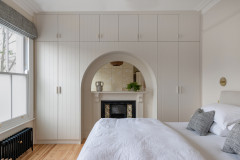
How to Reinstate Period-style Internal Doors
Restoration, off the shelf or custom-made – which is best for bringing the magic back to every room in your home?

Original period doors, made and fitted to complement architraves, skirting boards and staircases, can give homes character and architectural integrity. However, not everyone is lucky enough to have them, so how do you install something similar?
Three experts consider the relative merits of restoring reclaimed doors, buying new, off-the-shelf period styles, and getting bespoke versions made to order.
Professional advice from: Peter Goss of Goss Joinery; Russell Taylor of Russell Taylor Architects; Gary Richmond of Walk Interior Architecture & Design
Three experts consider the relative merits of restoring reclaimed doors, buying new, off-the-shelf period styles, and getting bespoke versions made to order.
Professional advice from: Peter Goss of Goss Joinery; Russell Taylor of Russell Taylor Architects; Gary Richmond of Walk Interior Architecture & Design
How can I source originals?
“You will be able to find doors of the same period, but they are unlikely to match any that may survive in the house,” Russell says. “Also, they’re unlikely to match the existing opening sizes. Second-hand doors from elsewhere can be used for houses and rooms that can tolerate a mixed, eclectic style, but for listed buildings and important rooms, it’s far better to get replacement doors made that are the right size, appearance and detail.”
If you don’t need an exact match to existing originals, architectural reclamation yards are a good place to start, according to Gary. “Not everyone has one close by,” he says, “but some bigger yards have their own websites or social media accounts. Otherwise, try eBay.”
Peter advises that you check your existing doors carefully before you start. “It was very popular [in the latter half of the 20th century] to hardboard over panelled doors,” he says. You may have originals without realising it.
“You will be able to find doors of the same period, but they are unlikely to match any that may survive in the house,” Russell says. “Also, they’re unlikely to match the existing opening sizes. Second-hand doors from elsewhere can be used for houses and rooms that can tolerate a mixed, eclectic style, but for listed buildings and important rooms, it’s far better to get replacement doors made that are the right size, appearance and detail.”
If you don’t need an exact match to existing originals, architectural reclamation yards are a good place to start, according to Gary. “Not everyone has one close by,” he says, “but some bigger yards have their own websites or social media accounts. Otherwise, try eBay.”
Peter advises that you check your existing doors carefully before you start. “It was very popular [in the latter half of the 20th century] to hardboard over panelled doors,” he says. You may have originals without realising it.
What are my options when it comes to renovating originals?
“Use a softly-softly approach if you want to restore the door yourself or employ a decorator,” Peter says. “Use a water-based stripper, then lightly sand and refinish. Some people have old pine doors dipped [in a tank of caustic solution to soften the paint before it’s removed by pressure-washing], but this can cause joints to open and doors to warp. Do not use a heat gun – the paint may be toxic.”
“Most period doors are meant to be painted,” Russell says. “Timber doors that are meant to be seen as timber will be made of a high-class wood, such as mahogany, and polished.”
“Depending on the decorative style you want, you might be happy with visible repairs and showing the original and new sections – as you might when restoring a period building,” Gary says, “but if the décor requires perfection, seek professional help.”
Hardwood doors may well be French polished, stained or lacquered. “If these need repairs that will be visible,” he says, “you’ll need a good cabinet-maker and/or French polisher to help disguise any surface repairs.”
Check out what happens when you hire a carpenter, joiner or cabinet-maker.
“Use a softly-softly approach if you want to restore the door yourself or employ a decorator,” Peter says. “Use a water-based stripper, then lightly sand and refinish. Some people have old pine doors dipped [in a tank of caustic solution to soften the paint before it’s removed by pressure-washing], but this can cause joints to open and doors to warp. Do not use a heat gun – the paint may be toxic.”
“Most period doors are meant to be painted,” Russell says. “Timber doors that are meant to be seen as timber will be made of a high-class wood, such as mahogany, and polished.”
“Depending on the decorative style you want, you might be happy with visible repairs and showing the original and new sections – as you might when restoring a period building,” Gary says, “but if the décor requires perfection, seek professional help.”
Hardwood doors may well be French polished, stained or lacquered. “If these need repairs that will be visible,” he says, “you’ll need a good cabinet-maker and/or French polisher to help disguise any surface repairs.”
Check out what happens when you hire a carpenter, joiner or cabinet-maker.
Can rotten and warped original doors be saved?
“It’s possible to scarf [a scarf joint is made up of two pieces of timber joined to create a longer span than one piece would cover] or replace sections of doors,” Peter says.
“After parts of a door are replaced or repaired, you’ll need to assess how obvious any new sections are,” Gary advises. “If they bother you, it’s back to painting or ‘blending’ to disguise the repair.”
“It’s difficult to correct warping,” Russell says, “but a warped door can usually be made to fit more satisfactorily by adjusting the frame and stops [the sections of wood the door sits against when closed].”
Warping will need specialist attention, Gary agrees. “But even if the doors are too warped to be serviceable, the wood might still be useful to repair other doors,” he says.
“It’s possible to scarf [a scarf joint is made up of two pieces of timber joined to create a longer span than one piece would cover] or replace sections of doors,” Peter says.
“After parts of a door are replaced or repaired, you’ll need to assess how obvious any new sections are,” Gary advises. “If they bother you, it’s back to painting or ‘blending’ to disguise the repair.”
“It’s difficult to correct warping,” Russell says, “but a warped door can usually be made to fit more satisfactorily by adjusting the frame and stops [the sections of wood the door sits against when closed].”
Warping will need specialist attention, Gary agrees. “But even if the doors are too warped to be serviceable, the wood might still be useful to repair other doors,” he says.
How do I replace broken panes in original glazed doors?
“If you want a ‘period looking’ restoration, try a salvage or reclamation yard. Keep your eye out for larger incomplete windows and get the glass cut to size,” Gary suggests.
“Most glass can be matched,” Russell says. “Ideally, replace it with toughened glass. Victorian and other older-style sheets of glass are available toughened from several companies.”
“If they’re beaded doors, it will be a simple case of removing the beads and panels and reglazing,” Peter says, “but if the panels were glued when the doors were put together, you’ll need to take the door apart.
“Another option,” he says, “is to router out to the depth of the rebate all around the panel [the rebate is the recess or groove that holds the glass panel in place under the beading]. Once the new panel has been inserted, you can cut in new beads.”
“If you want a ‘period looking’ restoration, try a salvage or reclamation yard. Keep your eye out for larger incomplete windows and get the glass cut to size,” Gary suggests.
“Most glass can be matched,” Russell says. “Ideally, replace it with toughened glass. Victorian and other older-style sheets of glass are available toughened from several companies.”
“If they’re beaded doors, it will be a simple case of removing the beads and panels and reglazing,” Peter says, “but if the panels were glued when the doors were put together, you’ll need to take the door apart.
“Another option,” he says, “is to router out to the depth of the rebate all around the panel [the rebate is the recess or groove that holds the glass panel in place under the beading]. Once the new panel has been inserted, you can cut in new beads.”
If I can’t source original period doors, can I get lookalike ones?
“There are lots of options when it comes to new period-style doors,” Gary says. “It will depend on your budget and whether your door frame is a standard size – or close enough that you can have an off-the-shelf door adapted to fit the frame.”
“If you can’t find one to match, it’s straightforward to have one made to your specifications,” Peter says.
Russell is reluctant to recommend ready-made doors for a period property and says, “For our projects, we always get them made.”
Find period property and restoration specialists in your area in the Houzz Professionals Directory.
“There are lots of options when it comes to new period-style doors,” Gary says. “It will depend on your budget and whether your door frame is a standard size – or close enough that you can have an off-the-shelf door adapted to fit the frame.”
“If you can’t find one to match, it’s straightforward to have one made to your specifications,” Peter says.
Russell is reluctant to recommend ready-made doors for a period property and says, “For our projects, we always get them made.”
Find period property and restoration specialists in your area in the Houzz Professionals Directory.
What’s the cheapest option for getting a period-style door?
“The cheapest option would be to search around for reclaimed originals on second-hand selling sites,” Peter says.
“A reclaimed door might be the cheapest to buy,” Gary says, “but after restoring and adapting it to size and then fitting it, it could end up being more expensive.”
To see more from any of the designers whose photos are featured in this article, click on the image, then on Learn More if you’re in the app, and follow the links to the professional’s profile.
“The cheapest option would be to search around for reclaimed originals on second-hand selling sites,” Peter says.
“A reclaimed door might be the cheapest to buy,” Gary says, “but after restoring and adapting it to size and then fitting it, it could end up being more expensive.”
To see more from any of the designers whose photos are featured in this article, click on the image, then on Learn More if you’re in the app, and follow the links to the professional’s profile.
What if Building Regulations require me to have fire doors?
You can buy fire doors off the shelf. “Period styles do exist,” Gary says, “but choice can be limited, unlike a bespoke option, which will come at a price.”
“Period-style fire doors can be made quite easily,” Russell says. “Making a fire-rated door is usually no more expensive than making one that’s not. Existing doors can be upgraded to fire rated by the addition of intumescent strips and smoke seals and intumescent paint. Fire-resistant glass is also available.”
When exposed to heat, intumescent strips and seals expand to close the gaps around a door to delay the spread of fire, while intumescent paint creates a charred surface that insulates the door and reduces heat transmission.
“If you require glazed or a specific style of fire door, you will need to go to a certified fire door manufacturer,” Peter advises. Look for companies that are members of the BWF Fire Door Alliance and hold a BM TRADA Q-Mark Fire Door Installation certificate.
You can buy fire doors off the shelf. “Period styles do exist,” Gary says, “but choice can be limited, unlike a bespoke option, which will come at a price.”
“Period-style fire doors can be made quite easily,” Russell says. “Making a fire-rated door is usually no more expensive than making one that’s not. Existing doors can be upgraded to fire rated by the addition of intumescent strips and smoke seals and intumescent paint. Fire-resistant glass is also available.”
When exposed to heat, intumescent strips and seals expand to close the gaps around a door to delay the spread of fire, while intumescent paint creates a charred surface that insulates the door and reduces heat transmission.
“If you require glazed or a specific style of fire door, you will need to go to a certified fire door manufacturer,” Peter advises. Look for companies that are members of the BWF Fire Door Alliance and hold a BM TRADA Q-Mark Fire Door Installation certificate.
What do I need to know about hanging doors?
“Hanging doors can be fiddly,” Russell says. “For a non-professional to do it depends on their competence and patience.”
“It’s worth employing a professional, who will be quicker and do a better job,” Peter advises. “Make sure there’s a nice even gap on three sides and the bottom to allow for a carpet or other floor surface. Give the lock edge a leading edge [cut on a slight angle] to prevent binding [against the frame]. ”
Gary agrees. “If the frame isn’t straight or the floor isn’t level (often the case in period properties), or if it’s hardwood and needs recessed hinges and locks, get professional help,” he says.
“Hanging doors can be fiddly,” Russell says. “For a non-professional to do it depends on their competence and patience.”
“It’s worth employing a professional, who will be quicker and do a better job,” Peter advises. “Make sure there’s a nice even gap on three sides and the bottom to allow for a carpet or other floor surface. Give the lock edge a leading edge [cut on a slight angle] to prevent binding [against the frame]. ”
Gary agrees. “If the frame isn’t straight or the floor isn’t level (often the case in period properties), or if it’s hardwood and needs recessed hinges and locks, get professional help,” he says.
What about ironmongery?
“Ironmongery follows the same hierarchy as the style of doors – simple in unimportant places, finer in more important ones,” Russell says. “Less important spaces will have rim locks [locks fixed to the surface of the door]; more important ones will have mortice locks [locks embedded within the thickness of the door] and usually the door will need to be more than 44mm thick.
“For nearly all period doors, it’s important to use locks and latches with a 125mm (5in) backset,” Russell continues. “This is the distance from the leading edge of the stile [the vertical section on the edge of a door] to the centre of the knob or handle. Modern locks and latches have a 75mm (3in) backset, which is wrong.” Russell advises you seek out a professional with the appropriate knowledge.
“Ironmongery follows the same hierarchy as the style of doors – simple in unimportant places, finer in more important ones,” Russell says. “Less important spaces will have rim locks [locks fixed to the surface of the door]; more important ones will have mortice locks [locks embedded within the thickness of the door] and usually the door will need to be more than 44mm thick.
“For nearly all period doors, it’s important to use locks and latches with a 125mm (5in) backset,” Russell continues. “This is the distance from the leading edge of the stile [the vertical section on the edge of a door] to the centre of the knob or handle. Modern locks and latches have a 75mm (3in) backset, which is wrong.” Russell advises you seek out a professional with the appropriate knowledge.
Peter offers an alternative. “If you’re trying to mix or integrate different styles of door in your home, such as modern and traditional, a good way to proceed is to choose ironmongery that contrasts with the door it’s fitted to.”
Choosing a period style for ironmongery can have its advantages, though, according to Gary. “If nothing else, it makes installation easier, because you can use existing holes and cut-outs. You won’t need to hide wear marks and holes created by previous handles that were in a different format or position. But, rather than brass or chrome, look for period-style door handles that come in more varied and modern finishes, such as bronze, black or a colour.”
Tell us…
Are you planning to reinstate period doors in your home? Was this advice useful? Share your thoughts in the Comments section.
Choosing a period style for ironmongery can have its advantages, though, according to Gary. “If nothing else, it makes installation easier, because you can use existing holes and cut-outs. You won’t need to hide wear marks and holes created by previous handles that were in a different format or position. But, rather than brass or chrome, look for period-style door handles that come in more varied and modern finishes, such as bronze, black or a colour.”
Tell us…
Are you planning to reinstate period doors in your home? Was this advice useful? Share your thoughts in the Comments section.

Sponsored
Reload the page to not see this specific ad anymore
“Usually, the architectural style or period of the property will be an obvious clue,” Gary Richmond says. “Also look at other joinery details, from the skirting boards and architraves to the staircase and newel posts. Armed with these initial references, you can start researching.”
“It’s important to remember that in Georgian, Victorian and some later houses, the doors throughout the building will not be the same,” Russell Taylor says. “Doors in the basement will not be the same as those in the principal rooms on the first or ground floors. Doors in the attic will be different again. Often if a house has five floors, there will be five or more styles of door.”
“Ask your neighbours if they have original features you can have a look at,” Peter Goss advises. This is important, because, while the date of the property is useful as a general guide, “there are very distinctive design variants within Victorian, Georgian and Arts & Crafts styles”.
Be aware that if you live in a listed building or a conservation area, you will need to consult with your local planning office and the relevant government body, such as Historic England, before replacing or carrying out any repairs or refurbishment works on doors.