
Renovating
Can I Extend My House or Loft Without Planning Permission?
Part two of our Permitted Development series looks at extensions – and you might be surprised at how far you can go

The first part of this series explored home improvements that fall under Permitted Development (PD). These were typically smaller alterations, such as adding a porch or garden room, but bigger projects – single-storey, double-storey and loft extensions – can also sometimes fall into this category, so it’s worth exploring this route before applying for full Planning Permission. For more information about loft conversions in particular, take a look at our Loft Planning guide.
Professional advice from: Geoff Bryson of Bryson Architecture; Andrew Sperring of JAS Building Services; James Hood of Model Projects
Beginning your loft conversion project? Read How Do I Begin a Loft Conversion?
Professional advice from: Geoff Bryson of Bryson Architecture; Andrew Sperring of JAS Building Services; James Hood of Model Projects
Beginning your loft conversion project? Read How Do I Begin a Loft Conversion?
What are the rules for a single-storey extension under PD?
“Extensions, including previous extensions, and other buildings must not exceed 50 percent of the total area of land around the original house,” Geoff says. “This includes any front, side and rear gardens.”
The term ‘original house’ means the house as it was first built or, if it was built before 1 July 1948, as it stood on that date. “Sheds and other outbuildings must be included when calculating the 50 percent limit,” he says.
“A single-storey side extension must not be wider than half the width of the original house and the height no more than four metres,” he adds.
“Extensions, including previous extensions, and other buildings must not exceed 50 percent of the total area of land around the original house,” Geoff says. “This includes any front, side and rear gardens.”
The term ‘original house’ means the house as it was first built or, if it was built before 1 July 1948, as it stood on that date. “Sheds and other outbuildings must be included when calculating the 50 percent limit,” he says.
“A single-storey side extension must not be wider than half the width of the original house and the height no more than four metres,” he adds.
“You can build a reasonably sized single-storey rear extension on a property under Permitted Development, depending on certain conditions,” Andrew says.
In England, a rear extension must not extend beyond the rear of the original house by more than six metres for semi-detached or terraced homes and by more than eight metres for detached homes. In Scotland, Wales and Northern Ireland, the limits are three metres for semi-detached or terraced homes and four meters for detached homes.
Find a local architect to help you plan your extension.
In England, a rear extension must not extend beyond the rear of the original house by more than six metres for semi-detached or terraced homes and by more than eight metres for detached homes. In Scotland, Wales and Northern Ireland, the limits are three metres for semi-detached or terraced homes and four meters for detached homes.
Find a local architect to help you plan your extension.
Do I need to inform anyone?
These increased limits are subject to the prior notification of the proposal to the local planning authority and the implementation of a Neighbourhood Consultation Scheme. Be aware that if objections are received, a proposal might not be allowed. Remember, too, that most extensions of properties still require approval under Building Regulations.
“Under Permitted Development, various designs are possible,” James says, “from a flat-roof modern box to a more classical pitched-roof extension. Unusual forms are also possible, such as angled walls and off-centre roofs.
PD does allow you to include full-width glazing and rooflights. “Remember, though,” James says, “that Permitted Development does require you use materials that match those of the existing house.”
These increased limits are subject to the prior notification of the proposal to the local planning authority and the implementation of a Neighbourhood Consultation Scheme. Be aware that if objections are received, a proposal might not be allowed. Remember, too, that most extensions of properties still require approval under Building Regulations.
“Under Permitted Development, various designs are possible,” James says, “from a flat-roof modern box to a more classical pitched-roof extension. Unusual forms are also possible, such as angled walls and off-centre roofs.
PD does allow you to include full-width glazing and rooflights. “Remember, though,” James says, “that Permitted Development does require you use materials that match those of the existing house.”
Can I build a double-storey extension?
“Two- [or double-] storey extensions are possible under Permitted Development,” James says, “but only to the rear of the property. Two-storey side extensions will require a full planning application.
“Any extension over one storey to the rear cannot extend further than three metres from the rear wall and must be stepped in two metres from the boundary,” he adds. “This makes extensions of this nature challenging for terraced properties.”
“The roof pitch or angle of extensions higher than one storey should match that of the existing house, as far as is practicable,” Geoff says. “Any upper-floor window in a wall or roof slope in a side elevation must be obscure-glazed and non-opening, unless the parts that can be opened are more than 1.7 metres above the floor where it’s installed. This is to prevent overlooking your neighbour’s property.”
“Two- [or double-] storey extensions are possible under Permitted Development,” James says, “but only to the rear of the property. Two-storey side extensions will require a full planning application.
“Any extension over one storey to the rear cannot extend further than three metres from the rear wall and must be stepped in two metres from the boundary,” he adds. “This makes extensions of this nature challenging for terraced properties.”
“The roof pitch or angle of extensions higher than one storey should match that of the existing house, as far as is practicable,” Geoff says. “Any upper-floor window in a wall or roof slope in a side elevation must be obscure-glazed and non-opening, unless the parts that can be opened are more than 1.7 metres above the floor where it’s installed. This is to prevent overlooking your neighbour’s property.”
Can I convert the loft?
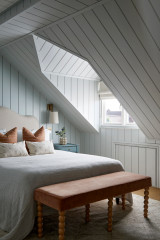
“Loft extensions that solely use the space within the existing roof do not normally require a planning application,” Geoff says. “This is great when creating a rooflight extension that could be classed as a bedroom, as long as Building Regulations approval has been obtained.”
It’s also possible to extend your loft space under Permitted Development if you keep within certain limitations. “You can build a loft conversion to a volume of up to 40 cubic metres for terraced houses and 50 cubic metres for semi-detached or detached houses,” Andrew says.
“However, some things may require Planning Permission, such as street-facing conversions, side windows, and work that might impact any protected wildlife species, such as bats,” he adds.
Find a loft conversion specialist today on Houzz.
“Loft extensions that solely use the space within the existing roof do not normally require a planning application,” Geoff says. “This is great when creating a rooflight extension that could be classed as a bedroom, as long as Building Regulations approval has been obtained.”
It’s also possible to extend your loft space under Permitted Development if you keep within certain limitations. “You can build a loft conversion to a volume of up to 40 cubic metres for terraced houses and 50 cubic metres for semi-detached or detached houses,” Andrew says.
“However, some things may require Planning Permission, such as street-facing conversions, side windows, and work that might impact any protected wildlife species, such as bats,” he adds.
Find a loft conversion specialist today on Houzz.
Are there any additional benefits to extending under Permitted Development?
PD often gives you greater scope to carry out a loft conversion compared to a full planning application.
“Under their homeowner design guidelines, local authorities will often make you step any dormer additions in from the sides, eaves and ridge line, greatly reducing the usable internal space and head room,” James says.
“By contrast, under Permitted Development, as long as the external volume increase is within stipulated limits [see Andrew’s comment, above] then the width and form of the dormer is not restricted,” he says.
PD often gives you greater scope to carry out a loft conversion compared to a full planning application.
“Under their homeowner design guidelines, local authorities will often make you step any dormer additions in from the sides, eaves and ridge line, greatly reducing the usable internal space and head room,” James says.
“By contrast, under Permitted Development, as long as the external volume increase is within stipulated limits [see Andrew’s comment, above] then the width and form of the dormer is not restricted,” he says.
How about rooflights and windows?
There are general rules to bear in mind, though, as James points out. “Dormers can only extend from a rear or side-facing roof slope and can’t be higher than the existing ridge line. However, rooflights are permitted to the front roof slope and are a great way to pull light into a property and provide natural ventilation,” he says.
This is particularly important in loft conversions, as lofts are often the warmest part of the house. Remember, too, says James, that hip-to-gable conversions are also possible under Permitted Development.
It’s worth noting that PD doesn’t allow for balconies or verandas. However, in most cases, a Juliet balcony is considered a Permitted Development, unless it has a floor, in which case it’s treated as a raised platform and would need planning approval.
Tell us…
Have you extended your home under Permitted Development? Share your experience and tips in the Comments section.
There are general rules to bear in mind, though, as James points out. “Dormers can only extend from a rear or side-facing roof slope and can’t be higher than the existing ridge line. However, rooflights are permitted to the front roof slope and are a great way to pull light into a property and provide natural ventilation,” he says.
This is particularly important in loft conversions, as lofts are often the warmest part of the house. Remember, too, says James, that hip-to-gable conversions are also possible under Permitted Development.
It’s worth noting that PD doesn’t allow for balconies or verandas. However, in most cases, a Juliet balcony is considered a Permitted Development, unless it has a floor, in which case it’s treated as a raised platform and would need planning approval.
Tell us…
Have you extended your home under Permitted Development? Share your experience and tips in the Comments section.


“Permitted Development covers the changes homeowners can make to their property without having to apply for Planning Permission,” Andrew Sperring says.
For example, Geoff Bryson says, “Any extension to a property [under PD] must comply with strict criteria regarding the height, width, materials and location of the extension relative to the current property. As long as the extension complies with these guidelines, a planning application isn’t required.”
However, it’s still recommended you contact your local planning authority to check the proposed work is lawful and you don’t need Planning Permission. To be certain, consider applying for a Lawful Development Certificate.