


Common Utility Room Mistakes and How to Avoid Them
Follow this expert advice for a laundry area that works hard and looks great, too

For those of us lucky enough to have one, a utility room is a hard-working space. It often contains our washing machine and clothes drying area, as well as storage for unglamorous essentials such as cleaning products, recycling boxes, pet food and infrequently used kitchen kit – all within what is often quite a compact space. So here, to help you get your utility room right, three designers highlight some common mistakes and how to avoid them.
Professional advice from: Cat Hoad of Absolute Project Management; Claudia Dorsch of Claudia Dorsch Interior Design; Eva Byrne of Houseology
Professional advice from: Cat Hoad of Absolute Project Management; Claudia Dorsch of Claudia Dorsch Interior Design; Eva Byrne of Houseology
Mistake 2: Assuming you need a separate room
Don’t presume that a dedicated utility room is the only way to go. “In a small house, a room devoted to utility functions can occupy precious space,” Eva says.
The solution
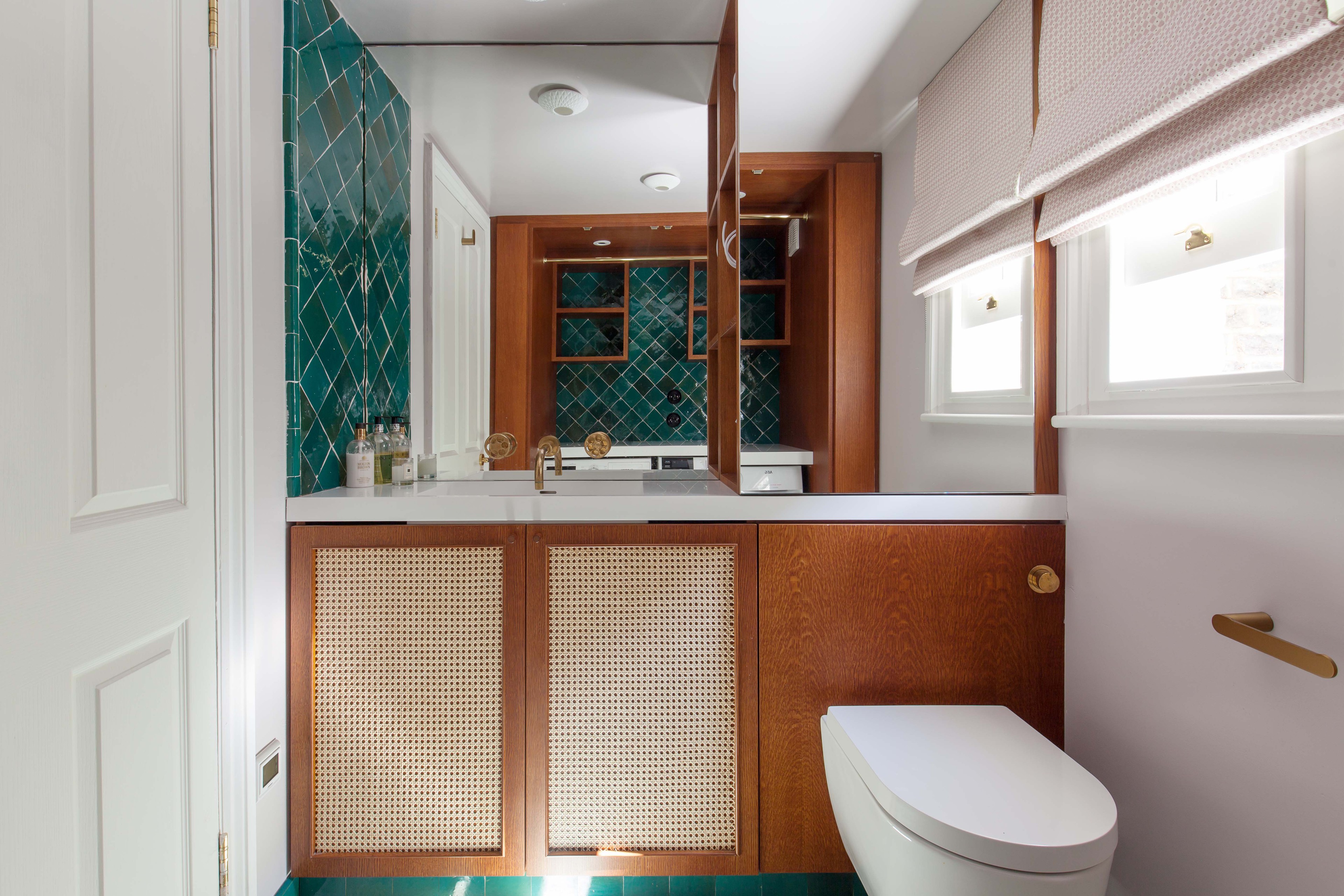
Work out if existing rooms could be redesigned to multi-task. “We’ve often combined a laundry with a guest cloakroom,” Claudia says. “Using clever joinery and interesting materials, finishes and colours, lighting and even art, we’ve created beautiful little spaces with dual functions.”
In this cloakroom, the washing machine and dryer are fitted along one wall, with open shelves, a hanging rail and a worktop, just seen reflected in the mirror.
Don’t presume that a dedicated utility room is the only way to go. “In a small house, a room devoted to utility functions can occupy precious space,” Eva says.
The solution
Work out if existing rooms could be redesigned to multi-task. “We’ve often combined a laundry with a guest cloakroom,” Claudia says. “Using clever joinery and interesting materials, finishes and colours, lighting and even art, we’ve created beautiful little spaces with dual functions.”
In this cloakroom, the washing machine and dryer are fitted along one wall, with open shelves, a hanging rail and a worktop, just seen reflected in the mirror.
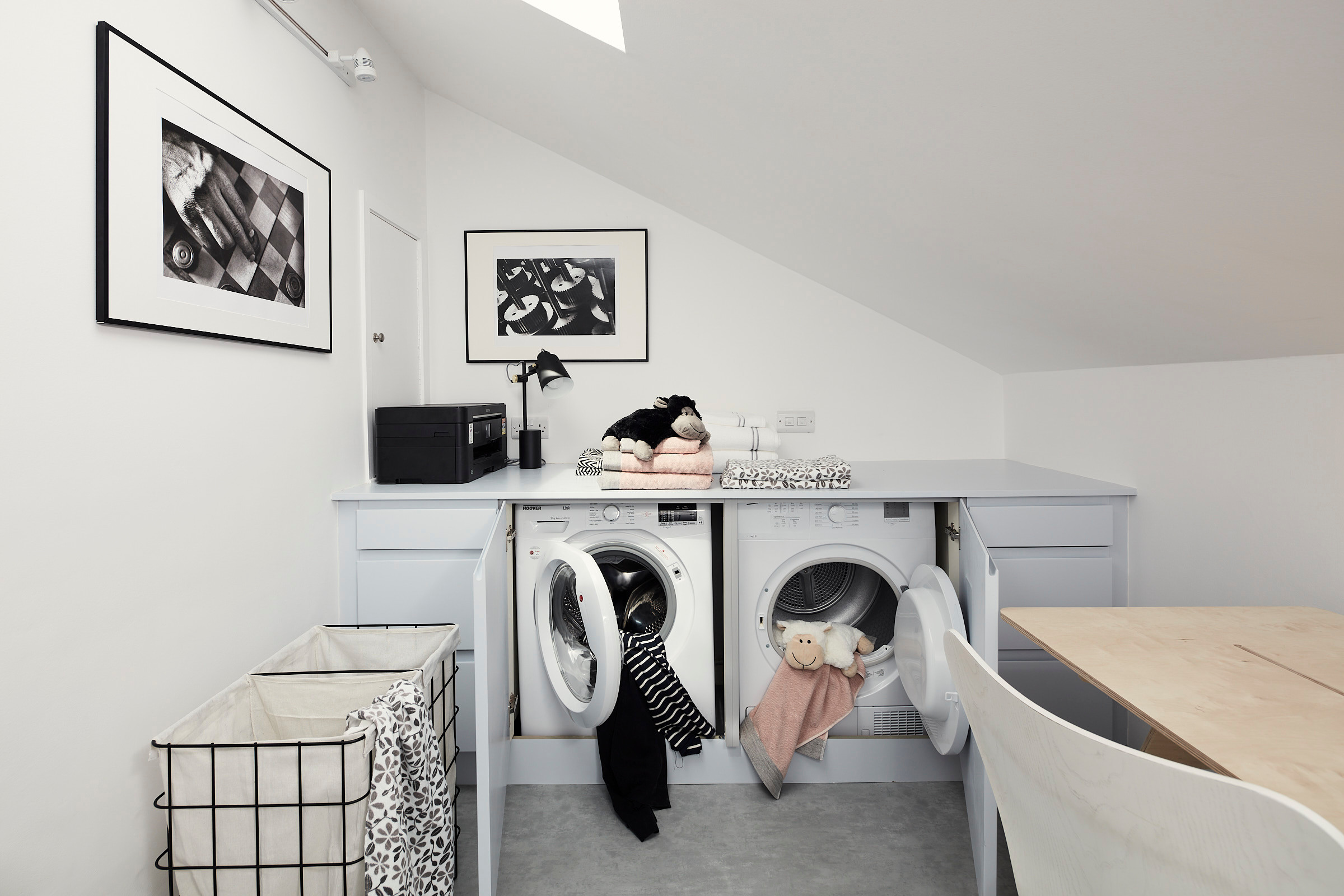
Once you embrace the idea that utility kit and storage can be fitted in anywhere, you’re free to create a truly multi-functional space. “With careful design, there’s no reason why you can’t combine the functions of the utility room with other uses, such as an exercise space or a home office,” Eva says.
For example, Eva hid a washer and dryer within the storage area in this office/exercise space.
To see more from any of the designers whose photos are featured in this article, click on the image, then on Learn More if you’re in the app, and follow the links to the professional’s profile.
For example, Eva hid a washer and dryer within the storage area in this office/exercise space.
To see more from any of the designers whose photos are featured in this article, click on the image, then on Learn More if you’re in the app, and follow the links to the professional’s profile.

Mistake 3: Not thinking creatively about storage
It can be easy to miss opportunities to incorporate helpful storage of all kinds. “Add as much storage as you can and ensure that corner units are used fully,” Claudia says. “We’ve seen many places where corners weren’t utilised.”
The solution
Building bespoke cupboards up to the ceiling makes the most of vertical space, although remember that the storage right at the top is only really practical for items you use infrequently.
Claudia also cautions against overcrowding the room with storage, as this can make it feel oppressive. “Include an open shelf and, where possible, add in space for two to three baskets for sorting laundry by colour,” she says. “Include this in any bespoke joinery you have made.”
Cat recommends fitting open cupboards. “They’re great for accommodating laundry baskets and recycling boxes,” she says. “Ensure there’s room to store bulky, movable items such as the ironing board and vacuum cleaner, too. It can be useful to mount these sorts of fittings on the wall to maximise floor space.”
And what about that ugly boiler, so often a feature of utility rooms? “Get some simple shelving built around the boiler and pipework,” Cat says. “You can add lots of useful, if not beautiful, storage in that way.”
More: When Does it Make Sense to Build in Bespoke Storage?
It can be easy to miss opportunities to incorporate helpful storage of all kinds. “Add as much storage as you can and ensure that corner units are used fully,” Claudia says. “We’ve seen many places where corners weren’t utilised.”
The solution
Building bespoke cupboards up to the ceiling makes the most of vertical space, although remember that the storage right at the top is only really practical for items you use infrequently.
Claudia also cautions against overcrowding the room with storage, as this can make it feel oppressive. “Include an open shelf and, where possible, add in space for two to three baskets for sorting laundry by colour,” she says. “Include this in any bespoke joinery you have made.”
Cat recommends fitting open cupboards. “They’re great for accommodating laundry baskets and recycling boxes,” she says. “Ensure there’s room to store bulky, movable items such as the ironing board and vacuum cleaner, too. It can be useful to mount these sorts of fittings on the wall to maximise floor space.”
And what about that ugly boiler, so often a feature of utility rooms? “Get some simple shelving built around the boiler and pipework,” Cat says. “You can add lots of useful, if not beautiful, storage in that way.”
More: When Does it Make Sense to Build in Bespoke Storage?
Mistake 4: Forgetting to install good lighting
Illumination is key in a utility room, particularly if it’s located in a space without windows. No one wants to be trying to pair a pile of black socks in poor light.
The solution
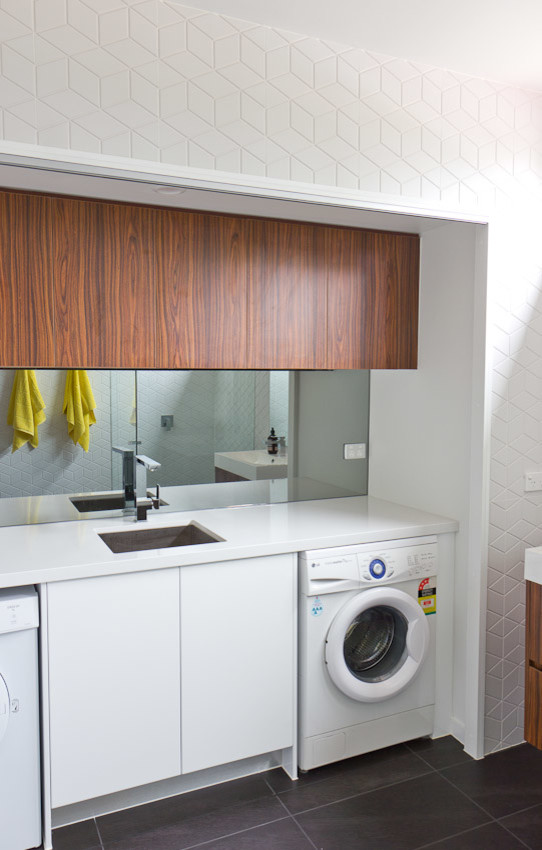
“Fit good lighting and consider LED strips in cupboards and alcoves as well as overhead lighting,” Cat says. “This will make using the utility much easier and more pleasant.” Mirrors will also help to boost the light and can make a compact room feel slightly bigger.
Find a lighting professional in your local area and read reviews from previous clients.
Illumination is key in a utility room, particularly if it’s located in a space without windows. No one wants to be trying to pair a pile of black socks in poor light.
The solution
“Fit good lighting and consider LED strips in cupboards and alcoves as well as overhead lighting,” Cat says. “This will make using the utility much easier and more pleasant.” Mirrors will also help to boost the light and can make a compact room feel slightly bigger.
Find a lighting professional in your local area and read reviews from previous clients.
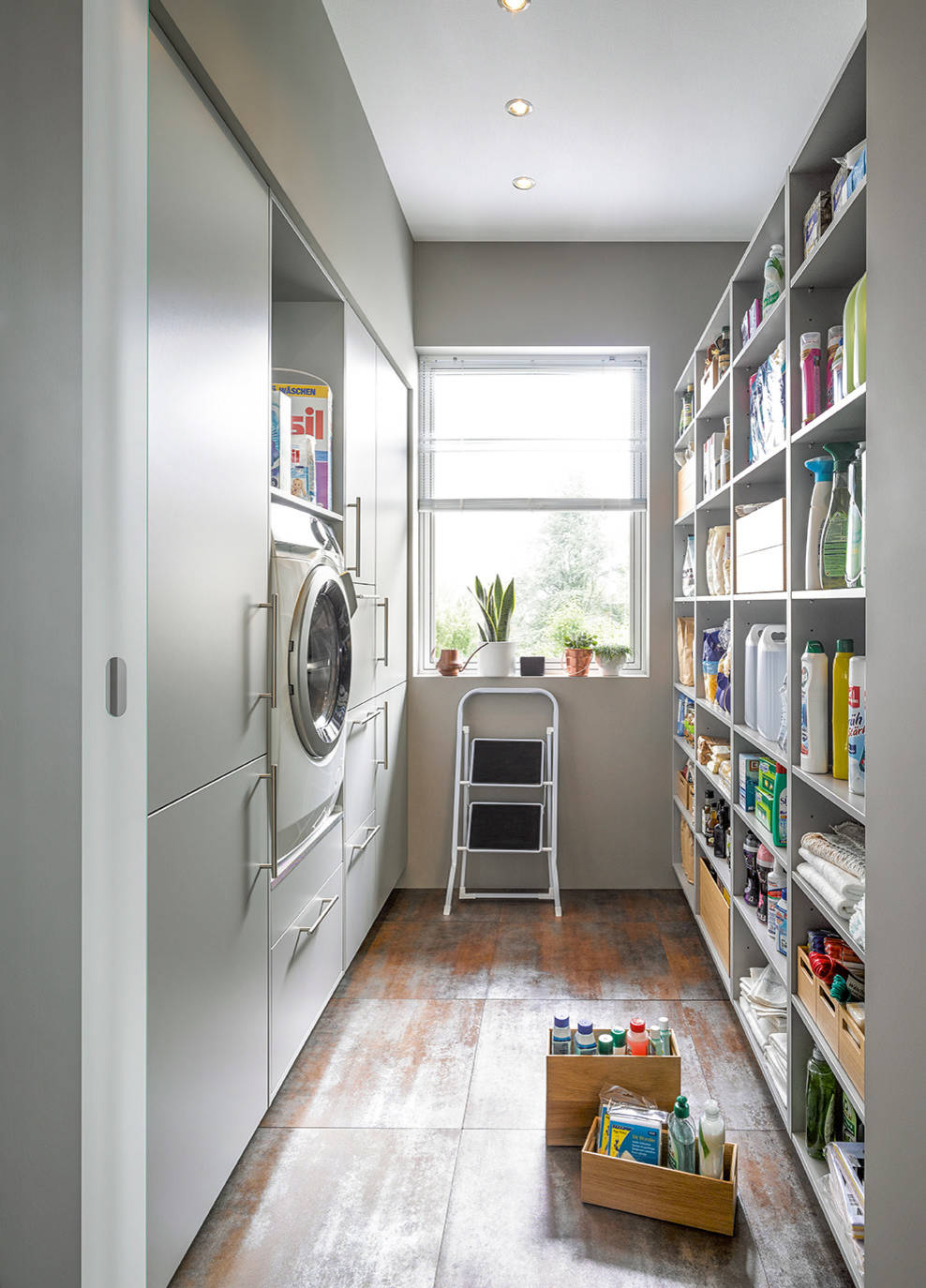
Mistake 5: Ignoring the ergonomics of the space
Overlooking how easy, comfortable and convenient your utility room will be to use is an error.
“It’s a functional space that you, or someone else in your family, will probably use most days,” Cat says. “So it’s really important the ergonomics work, especially because lots of utility rooms are small and squeezed to maximise space elsewhere in the home.
“It will be incredibly annoying to use frequently if you have to stretch and crouch to reach everyday appliances,” she says.
The solution
First, position the most used appliances with care, then build storage around them. Consider locating the washing machine higher up, as the designers have done here, so you don’t have to bend down to access it.
An even more useful solution is to ask a joiner to build a pull-out surface beneath the appliance on which to rest items while loading and unloading.
Overlooking how easy, comfortable and convenient your utility room will be to use is an error.
“It’s a functional space that you, or someone else in your family, will probably use most days,” Cat says. “So it’s really important the ergonomics work, especially because lots of utility rooms are small and squeezed to maximise space elsewhere in the home.
“It will be incredibly annoying to use frequently if you have to stretch and crouch to reach everyday appliances,” she says.
The solution
First, position the most used appliances with care, then build storage around them. Consider locating the washing machine higher up, as the designers have done here, so you don’t have to bend down to access it.
An even more useful solution is to ask a joiner to build a pull-out surface beneath the appliance on which to rest items while loading and unloading.
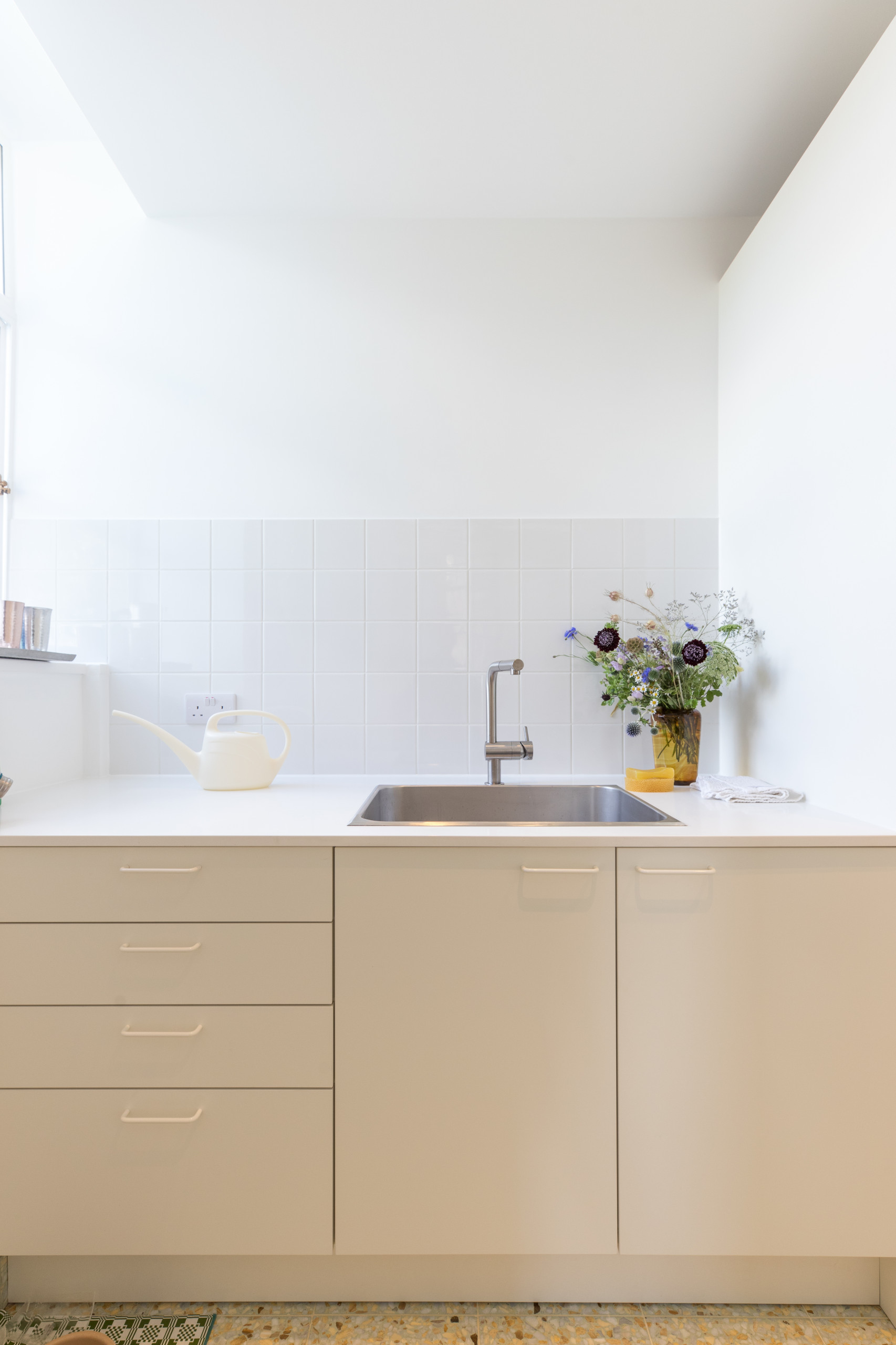
Mistake 6: Failing to factor in ventilation
Some utility rooms, like this one, are blessed with windows. Often, though, this functional room is squeezed into a pocket of space with no connection to the outside, in which case, you’ll need to think about ventilation.
The solution
“Fit an extractor fan that ducts to the exterior,” Cat advises. “The appliances in the utility room will probably produce heat and moisture, so it’s really important to ventilate it to avoid problems with condensation.”
Some utility rooms, like this one, are blessed with windows. Often, though, this functional room is squeezed into a pocket of space with no connection to the outside, in which case, you’ll need to think about ventilation.
The solution
“Fit an extractor fan that ducts to the exterior,” Cat advises. “The appliances in the utility room will probably produce heat and moisture, so it’s really important to ventilate it to avoid problems with condensation.”
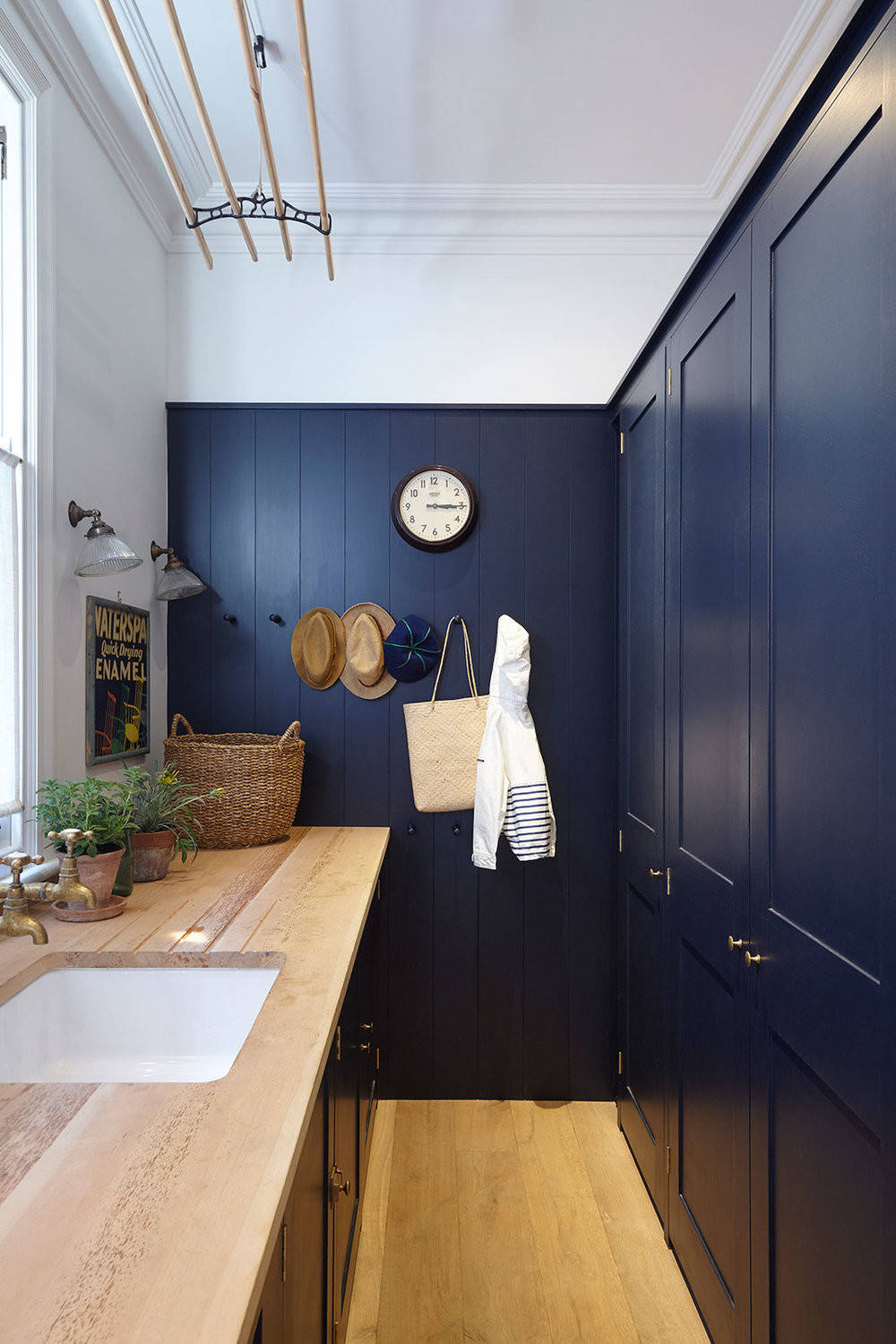
Mistake 7: Scrimping on those practical extras
In a small space, it can be tempting to limit how many things you include, but that could make the utility room less functional.
The solution
You might think you don’t need one or can’t fit it in, but you’ll never regret installing a sink. “An additional sink is almost always really useful, even if there’s only room for a small one,” Cat says.
Building in somewhere to hang and dry clothes will mean you can say goodbye to that space-hungry airer that sits on your floor. “Always try to allocate a space for air drying,” Claudia says. “Use a flip-down wall rack, an under-mounted hanging rail or hooks on the wall.”
“A heated towel rail is a great choice here,” Eva adds, “allowing socks and other small items to be aired easily. A pulley rail works well, too, or even a fixed rail, which will allow you to air clothes on hangers.”
In a small space, it can be tempting to limit how many things you include, but that could make the utility room less functional.
The solution
You might think you don’t need one or can’t fit it in, but you’ll never regret installing a sink. “An additional sink is almost always really useful, even if there’s only room for a small one,” Cat says.
Building in somewhere to hang and dry clothes will mean you can say goodbye to that space-hungry airer that sits on your floor. “Always try to allocate a space for air drying,” Claudia says. “Use a flip-down wall rack, an under-mounted hanging rail or hooks on the wall.”
“A heated towel rail is a great choice here,” Eva adds, “allowing socks and other small items to be aired easily. A pulley rail works well, too, or even a fixed rail, which will allow you to air clothes on hangers.”

Mistake 8: Thinking you don’t need to add some style
When designing your utility space, don’t fall into the trap of forgetting to have fun. Often, colour, pattern and texture are overlooked in the drive to make the space functional, but they can make a huge difference to how you feel about using it.
The solution
“Laundry is a chore, but make it the best-looking chore it can be by using colours, nice materials and good lighting and adding a bit of fun,” Claudia says. “If you have any spare wall space, hang a picture, too. In this laundry, we wallpapered the ceiling to liven up the space.”
When designing your utility space, don’t fall into the trap of forgetting to have fun. Often, colour, pattern and texture are overlooked in the drive to make the space functional, but they can make a huge difference to how you feel about using it.
The solution
“Laundry is a chore, but make it the best-looking chore it can be by using colours, nice materials and good lighting and adding a bit of fun,” Claudia says. “If you have any spare wall space, hang a picture, too. In this laundry, we wallpapered the ceiling to liven up the space.”
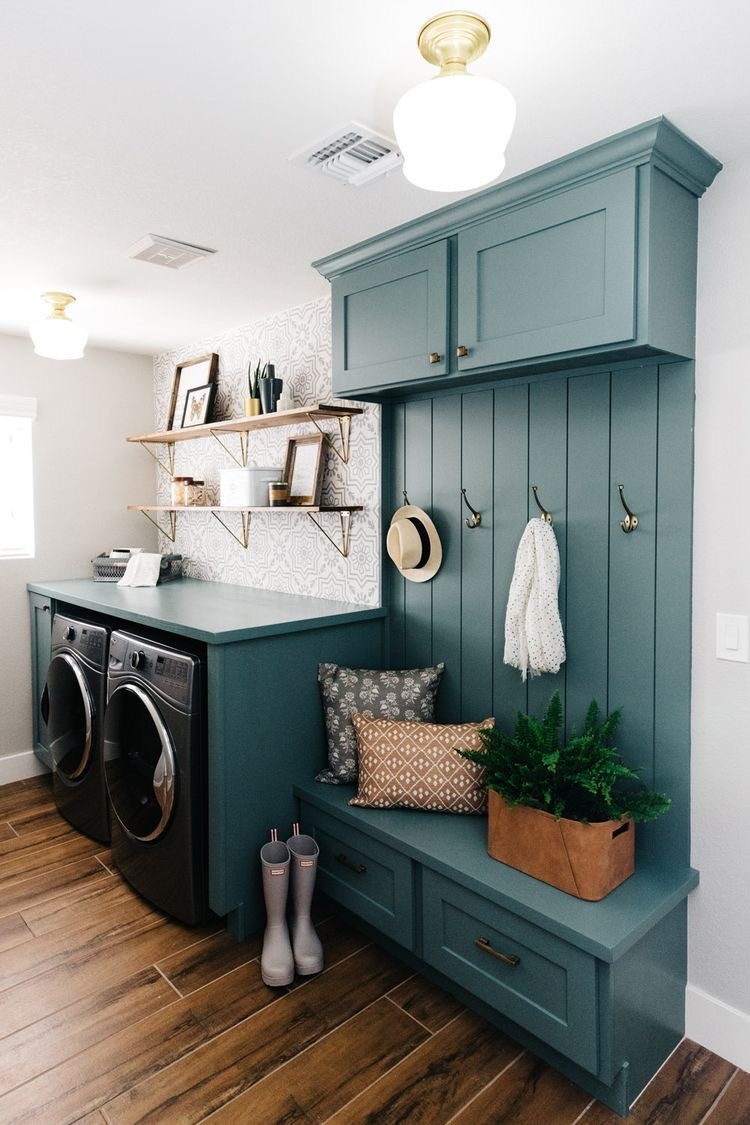
Cat agrees, stressing the importance of combining practicality with good looks. “Choose fittings, surfaces and finishes that are both attractive and hard-wearing,” she says. “Surfaces should be easy to clean, but, as you’ll probably be using the room a lot, your experience will be much better if there are tiles, colours and door handles you love rather than just tolerate.”
Tell us…
Are you designing a utility space? Did you find this expert advice useful? Let us know in the Comments.
Tell us…
Are you designing a utility space? Did you find this expert advice useful? Let us know in the Comments.

Sponsored
Reload the page to not see this specific ad anymore
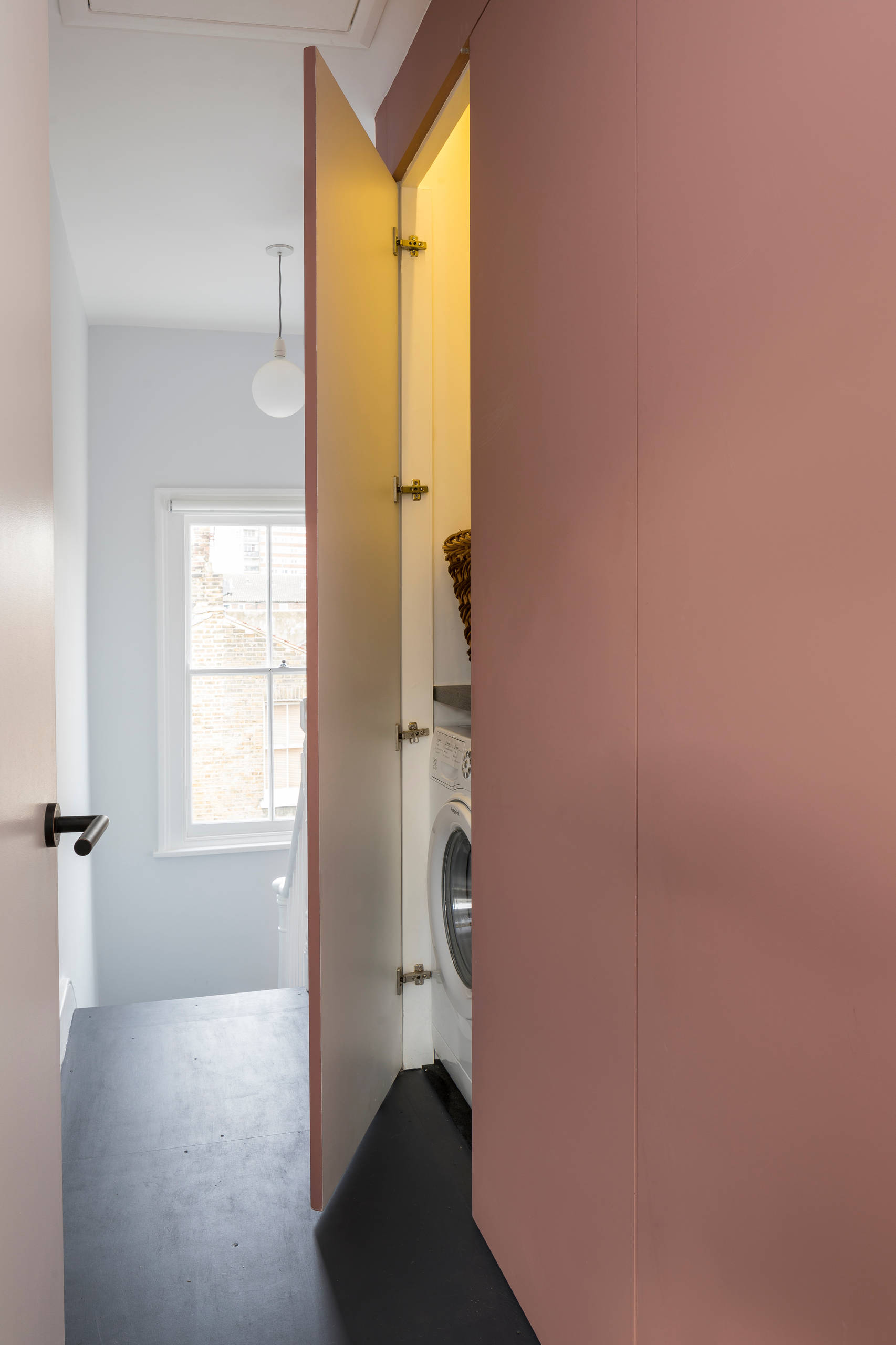
Don’t make the mistake of thinking your utility room has to be on the ground floor or next to the kitchen, say the professionals. “It may need to move up or down in the house, depending on other needs and use of spaces,” Claudia Dorsch says.
The solution
Be clear about how you want to use the space when it comes to deciding on its position. “For example, don’t put a utility on the lower ground floor if you plan to dry and iron everything on the top floor,” Cat Hoad says. “Perhaps a cupboard on the same floor with the washing machine and dryer in it would be better, if plumbing and drainage can be arranged. This is usually straightforward if there’s a bathroom nearby.”
Eva Byrne advises against using up valuable space – and light – next to the garden for a utility room. “My rule of thumb in a modest house is to locate the utility room towards the middle of the home where it’s darkest and it won’t impede the relationship between the living spaces and the garden,” she says.
Find the perfect pro for your renovation in the Houzz Professionals Directory and read reviews from previous clients.