
House Exterior with Wood Cladding and Concrete Fibreboard Cladding Ideas and Designs
Refine by:
Budget
Sort by:Popular Today
1 - 20 of 15,581 photos
Item 1 of 3
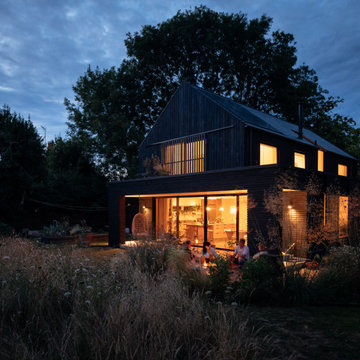
 HAPA Architects
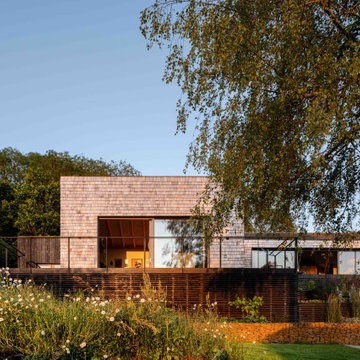
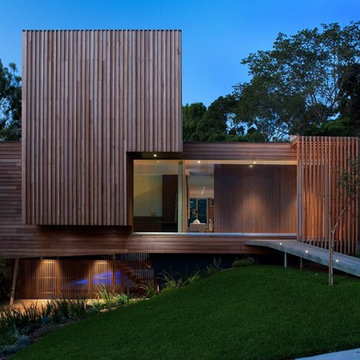
Black Timber House is an award-winning eco home set within the South Downs National Park. Designed with sustainability in mind, it features locally sourced materials, passive energy strategies, and striking charred English larch cladding using the Yakisugi method. The house consists of two stacked volumes, creating dramatic overhangs and a sheltered veranda. Large picture windows frame views of rolling meadows, while a vaulted first floor reaches into the tree canopy. With a handcrafted kitchen made from surplus oak flooring and a zinc worktop, the home blends contemporary design with natural textures, ensuring harmony with its rural surroundings.
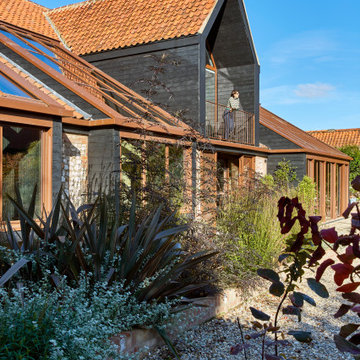
 Studio 29 Architects
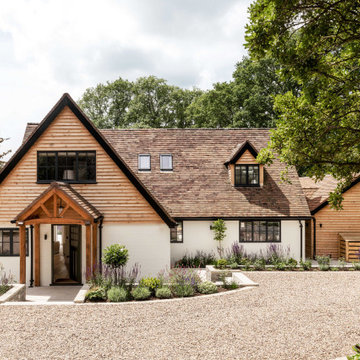
Front entrance approach which also serves as a south facing garden. Raised brick beds with large fronded plants to create height and interest and be seen from inside.
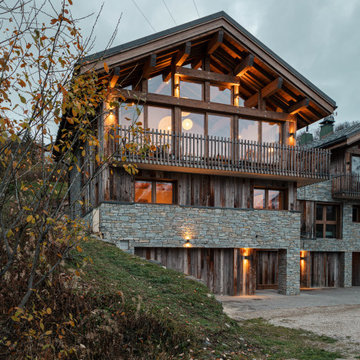

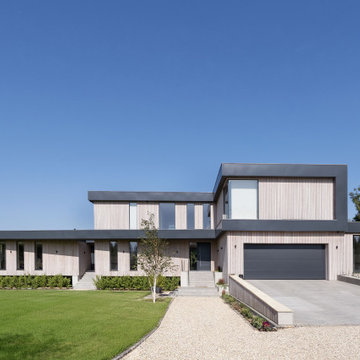
 April Hamilton Interiors LLP
A stunning example of modern residential architecture, this contemporary home features clean lines, dramatic design and expansive glass elements.
Surrounded by large grass areas, the landscape enhances the home’s bold presence, allowing it to stand as a true statement piece.
Perfect inspiration for those seeking striking yet timeless contemporary home design.


 Improva
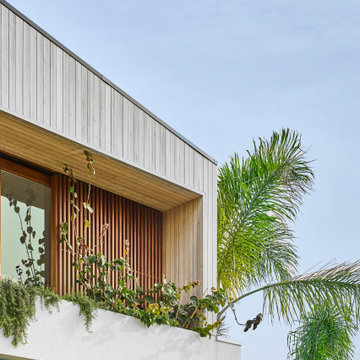
A refined exterior detail featuring vertical timber cladding and warm batten screens framing the balcony. Integrated planter boxes soften the modern geometry with cascading greenery, blending natural elements with architectural precision.
 Latitude 37
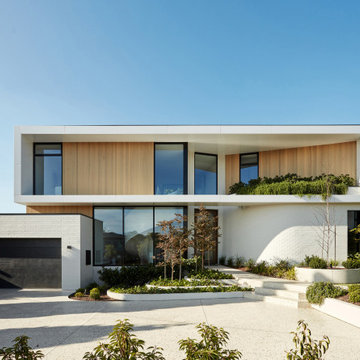
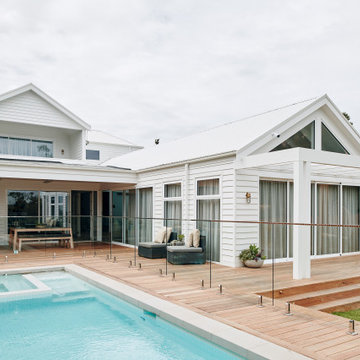
Awarded Australia’s Best Display Home 2022 by MBA, Sanctuary has been crafted to be a modern luxurious haven. Latitude 37’s custom design and construction capability is showcased on a grand scale.

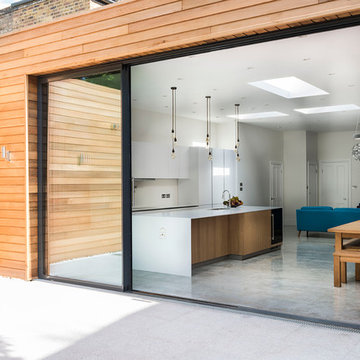
 GDL London
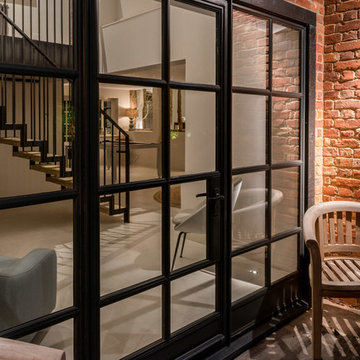
A closer shot of the open sky frame door, which serves well to bring the two spaces - outside and inside together as one, resulting in a flow like none other.



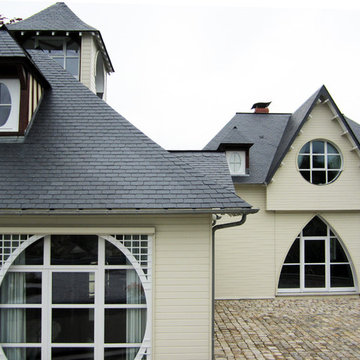
 undos Arquitectura Cooperativa
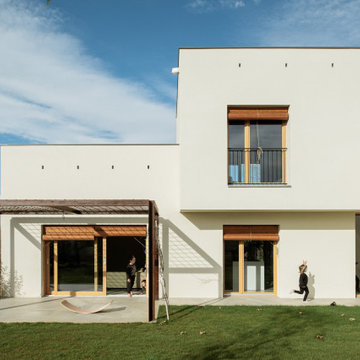
Vista de la façana del pati. La casa s'obre totalment a aquest espai, que gaudeix de sol durant tot el dia i és el centre de l'activitat de la casa.
 Paul Cashin Architects
Photography by Richard Chivers https://www.rchivers.co.uk/
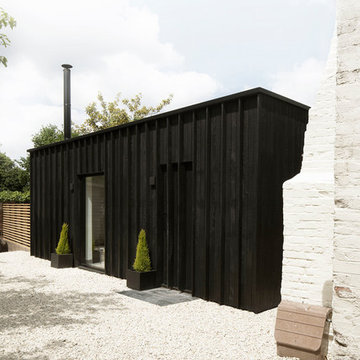
Marshall House is an extension to a Grade II listed dwelling in the village of Twyford, near Winchester, Hampshire. The original house dates from the 17th Century, although it had been remodelled and extended during the late 18th Century.
The clients contacted us to explore the potential to extend their home in order to suit their growing family and active lifestyle. Due to the constraints of living in a listed building, they were unsure as to what development possibilities were available. The brief was to replace an existing lean-to and 20th century conservatory with a new extension in a modern, contemporary approach. The design was developed in close consultation with the local authority as well as their historic environment department, in order to respect the existing property and work to achieve a positive planning outcome.
Like many older buildings, the dwelling had been adjusted here and there, and updated at numerous points over time. The interior of the existing property has a charm and a character - in part down to the age of the property, various bits of work over time and the wear and tear of the collective history of its past occupants. These spaces are dark, dimly lit and cosy. They have low ceilings, small windows, little cubby holes and odd corners. Walls are not parallel or perpendicular, there are steps up and down and places where you must watch not to bang your head.
The extension is accessed via a small link portion that provides a clear distinction between the old and new structures. The initial concept is centred on the idea of contrasts. The link aims to have the effect of walking through a portal into a seemingly different dwelling, that is modern, bright, light and airy with clean lines and white walls. However, complementary aspects are also incorporated, such as the strategic placement of windows and roof lights in order to cast light over walls and corners to create little nooks and private views. The overall form of the extension is informed by the awkward shape and uses of the site, resulting in the walls not being parallel in plan and splaying out at different irregular angles.
Externally, timber larch cladding is used as the primary material. This is painted black with a heavy duty barn paint, that is both long lasting and cost effective. The black finish of the extension contrasts with the white painted brickwork at the rear and side of the original house. The external colour palette of both structures is in opposition to the reality of the interior spaces. Although timber cladding is a fairly standard, commonplace material, visual depth and distinction has been created through the articulation of the boards. The inclusion of timber fins changes the way shadows are cast across the external surface during the day. Whilst at night, these are illuminated by external lighting.
A secondary entrance to the house is provided through a concealed door that is finished to match the profile of the cladding. This opens to a boot/utility room, from which a new shower room can be accessed, before proceeding to the new open plan living space and dining area.

 Architect Your Home
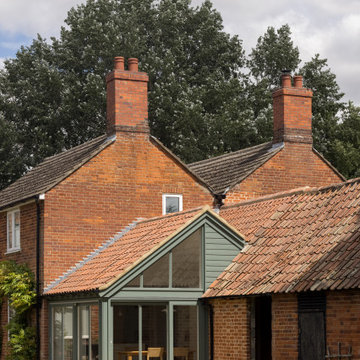
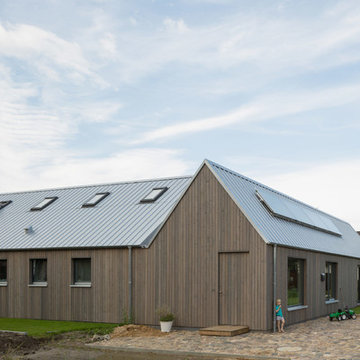
Conversion and renovation of a Grade II listed barn into a bright contemporary home


 Franz Habisreutinger GmbH & Co. KG
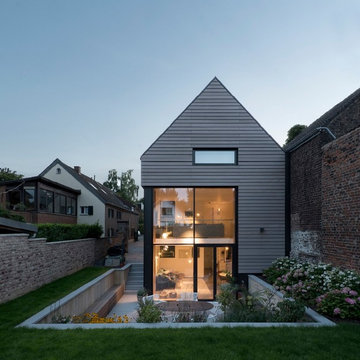
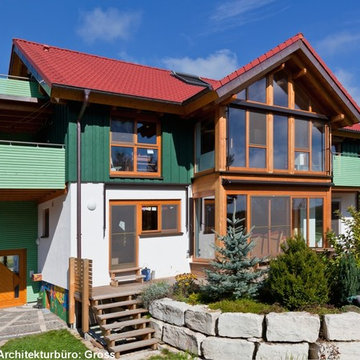
Objektbeschreibung: Wohnhaus | Produkt: Cape Cod | Architekturbüro: Gross
1