


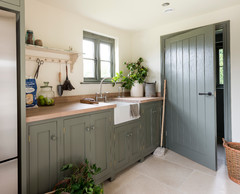
Housekeeping: The Japanese Art of Decluttering
Browse tips from Japanese decluttering expert Marie Kondo for a healthier and happier home

Another day, another self-help manual. When I’m told to do something that promises to change my life I tend to switch off, but a friend recently urged me to read Japanese professional-organiser Marie Kondo’s The Life-Changing Magic of Tidying when I told her I had problems decluttering. I, like many people, hang on to things I’m unlikely to ever use again, and I try to keep it all under control with the usual go-to solution of more storage. But storage is not the answer, according to Japanese decluttering expert, Marie Kondo. She urges us to address our stuff, not our storage, and to keep only items that ‘spark joy’. And by doing so transform our living spaces. ‘When you tidy your space completely, you transform the scenery around you. The change is so profound that you will feel you are living in a totally different world.’ If that sounds appealing, here’s a selection of Kondo’s wisdom…
Discard, discard, discard
And did I say discard? This method of only keeping those items that spark joy, means that we end up discarding a great deal. Kondo reckons that the average amount thrown out by a single one of her clients is 20-30 45-litre bags for a couple and for a family of three, closer to 70 bags. She mentions one client – a couple – who threw out 200 bags.
And did I say discard? This method of only keeping those items that spark joy, means that we end up discarding a great deal. Kondo reckons that the average amount thrown out by a single one of her clients is 20-30 45-litre bags for a couple and for a family of three, closer to 70 bags. She mentions one client – a couple – who threw out 200 bags.
Be nice to your socks
Whatever we may think about people who commune with inanimate objects, this is one of the book’s charms. Part of the method is to treat our belongings with respect; Kondo is appalled at how some of her clients treat their socks – rolling them up in balls and knotting tights in the middle (oops!). They do a good job and should be treated better, she tells us, so should be folded carefully, and allowed to rest after a job well done.
Whatever we may think about people who commune with inanimate objects, this is one of the book’s charms. Part of the method is to treat our belongings with respect; Kondo is appalled at how some of her clients treat their socks – rolling them up in balls and knotting tights in the middle (oops!). They do a good job and should be treated better, she tells us, so should be folded carefully, and allowed to rest after a job well done.
Sort by category, not by room
When we tidy one place at a time, ‘we can never grasp the overall volume and therefore can never finish,’ says Kondo. This flies in the face of conventional sorting wisdom, but it’s crucial to success, she says. ‘Excess is caused by ignorance of what we actually own,’ she says. But if we sort by category – clothes one day, books the next – laying each of these things out, we can see what we have, and therefore what we need to discard.
When we tidy one place at a time, ‘we can never grasp the overall volume and therefore can never finish,’ says Kondo. This flies in the face of conventional sorting wisdom, but it’s crucial to success, she says. ‘Excess is caused by ignorance of what we actually own,’ she says. But if we sort by category – clothes one day, books the next – laying each of these things out, we can see what we have, and therefore what we need to discard.
A place for everything
The method is as simple as knowing what to keep and knowing where to put what you keep. So designate a spot for everything. If everything doesn’t have a home your house will become cluttered again pretty quickly. ‘Effective tidying involves only two essential decisions: discarding and deciding where to store things,’ says Kondo.
The method is as simple as knowing what to keep and knowing where to put what you keep. So designate a spot for everything. If everything doesn’t have a home your house will become cluttered again pretty quickly. ‘Effective tidying involves only two essential decisions: discarding and deciding where to store things,’ says Kondo.
Learn to fold well
‘Folding is really a form of dialogue with our wardrobe,’ she says.
By folding our clothes properly – and Kondo gives detailed instructions on the best way – we treat our clothes with respect; they’ll look better, last longer and we are able to see at a glance what we have. She favours drawers, especially cheap see-through plastic ones and recommends organising the contents of our wardrobes so we can see what we have at a glance
‘Folding is really a form of dialogue with our wardrobe,’ she says.
By folding our clothes properly – and Kondo gives detailed instructions on the best way – we treat our clothes with respect; they’ll look better, last longer and we are able to see at a glance what we have. She favours drawers, especially cheap see-through plastic ones and recommends organising the contents of our wardrobes so we can see what we have at a glance
Thank your shoes
Remove your shoes when you come home at night, thank them for a hard day’s work, and store them away. Same goes for handbags. When Kondo returns home, she thanks her shoes, puts them away, empties her handbag, empties her purse of receipts and anything collected throughout the day, discarding or putting everything away where it belongs. Hence her house – and her handbag – remain uncluttered and she can find everything when she needs it.
Check out 12 ways to hack your wardrobe
Remove your shoes when you come home at night, thank them for a hard day’s work, and store them away. Same goes for handbags. When Kondo returns home, she thanks her shoes, puts them away, empties her handbag, empties her purse of receipts and anything collected throughout the day, discarding or putting everything away where it belongs. Hence her house – and her handbag – remain uncluttered and she can find everything when she needs it.
Check out 12 ways to hack your wardrobe
Keep surfaces clear
Kondo hates to see shampoo bottles and other clutter left out on surfaces. She thinks it’s just as easy to get into the habit of putting everything away and getting it out when you need it. This means not having to clean the gunky mess that these things create.
Kondo hates to see shampoo bottles and other clutter left out on surfaces. She thinks it’s just as easy to get into the habit of putting everything away and getting it out when you need it. This means not having to clean the gunky mess that these things create.
Keep the sink clear
Same goes for clutter that collects around the kitchen sink. Have a cupboard under the sink reserved for sponges, cloths and washing up liquid rather than leaving it to clutter up the worktop.
Browse foolproof ways to declutter your kitchen
Same goes for clutter that collects around the kitchen sink. Have a cupboard under the sink reserved for sponges, cloths and washing up liquid rather than leaving it to clutter up the worktop.
Browse foolproof ways to declutter your kitchen
Komono – the junk drawer
Komono is the Japanese term for miscellaneous small items such as gadgets, tools and accessories. Kondo knows that in every home she goes to there will be one – a drawer or box full of loose change, hair grips, spare buttons, lucky charms, batteries that may or may not work.
Komono is the Japanese term for miscellaneous small items such as gadgets, tools and accessories. Kondo knows that in every home she goes to there will be one – a drawer or box full of loose change, hair grips, spare buttons, lucky charms, batteries that may or may not work.
Purge the junk
‘No longer keep items ‘just because’,’ she says. ‘I urge you to take stock of your komono and save only, and I mean only, those that bring you joy.’
‘No longer keep items ‘just because’,’ she says. ‘I urge you to take stock of your komono and save only, and I mean only, those that bring you joy.’
Storage is not the answer
‘Most people leap at storage methods that promise quick and convenient ways to remove visible clutter,’ says Kondo.
But simply putting things away only ‘creates the illusion that the clutter problem has been solved.’
‘Most people leap at storage methods that promise quick and convenient ways to remove visible clutter,’ says Kondo.
But simply putting things away only ‘creates the illusion that the clutter problem has been solved.’
Take stock
Kondo recalls countless clients who have complained to her that they don’t have room when the real problem is that we have far more than we need or want, she says. So she believes in sorting and discarding first, and then finding the most simple of storage systems.
Kondo recalls countless clients who have complained to her that they don’t have room when the real problem is that we have far more than we need or want, she says. So she believes in sorting and discarding first, and then finding the most simple of storage systems.
Do it once
The often quoted wisdom of doing a little bit each day doesn’t work, according to Kondo. She reckons you should do it all at once, and get it over with, leaving your house thoroughly organised. Doing it a little bit each day will leave you doing it forever, she says.
‘It is better to tidy up quickly and get it over with. Why? Because tidying is not the purpose of life.’ Such sweet words are like honey to us messy people.
The often quoted wisdom of doing a little bit each day doesn’t work, according to Kondo. She reckons you should do it all at once, and get it over with, leaving your house thoroughly organised. Doing it a little bit each day will leave you doing it forever, she says.
‘It is better to tidy up quickly and get it over with. Why? Because tidying is not the purpose of life.’ Such sweet words are like honey to us messy people.
Tackle books and papers
Keeping only the books you love is a way to identify your real interests, according to Kondo. ‘Keep only those that make you happy just to see them on your shelves,’ she says.
As for papers, ‘my basic principle for sorting papers is to throw them all away … they will never inspire joy.’ I like the sound of this but am not sure if the tax department would agree!
Keeping only the books you love is a way to identify your real interests, according to Kondo. ‘Keep only those that make you happy just to see them on your shelves,’ she says.
As for papers, ‘my basic principle for sorting papers is to throw them all away … they will never inspire joy.’ I like the sound of this but am not sure if the tax department would agree!
Letting go
‘I might need it later’ or ‘It’s a waste to throw it out’ are many of the familiar objections we raise to parting with our things. As someone with the potential to hoard, I can relate to this. The jeans that you might fit into again, the walking boots you might wear when you next go on a 30km hike, clothes that might come into fashion again – perhaps in 20 years’ time! It goes on and on, but all these possessions only stand in the way of enjoying the stuff we have.
So if discarding sounds wasteful, consider that you’ll enjoy what you have more, meaning that you might even buy less. ‘Most people are overwhelmed by the sheer volume of what they own,’ she says. ‘To truly cherish things that are important to you, you must first discard those that have outlived their purpose … Let them go, with gratitude.’
‘I might need it later’ or ‘It’s a waste to throw it out’ are many of the familiar objections we raise to parting with our things. As someone with the potential to hoard, I can relate to this. The jeans that you might fit into again, the walking boots you might wear when you next go on a 30km hike, clothes that might come into fashion again – perhaps in 20 years’ time! It goes on and on, but all these possessions only stand in the way of enjoying the stuff we have.
So if discarding sounds wasteful, consider that you’ll enjoy what you have more, meaning that you might even buy less. ‘Most people are overwhelmed by the sheer volume of what they own,’ she says. ‘To truly cherish things that are important to you, you must first discard those that have outlived their purpose … Let them go, with gratitude.’
Live in the present
Discarding things can be a way to say goodbye to our past, too – photographs, old school uniforms, letters, report cards, etc – only keep those that bring joy. By doing so, you make room for the present.
Kondo also has many clients who stockpile because of insecurities about the future. She points to clients who have 60 toothbrushes, 30 boxes of cling film, 80 rolls of toilet paper. They feel anxious about running out and always feel they don’t have enough. Not until they do a major sort out, do they realise they have amassed so much.
‘The best way to find out what we really need is to get rid of what we don’t,’ she says.
Discarding things can be a way to say goodbye to our past, too – photographs, old school uniforms, letters, report cards, etc – only keep those that bring joy. By doing so, you make room for the present.
Kondo also has many clients who stockpile because of insecurities about the future. She points to clients who have 60 toothbrushes, 30 boxes of cling film, 80 rolls of toilet paper. They feel anxious about running out and always feel they don’t have enough. Not until they do a major sort out, do they realise they have amassed so much.
‘The best way to find out what we really need is to get rid of what we don’t,’ she says.
Say goodbye to gifts
Many of the things we hold on to are gifts from well-meaning friends and family. We can’t bear to part with these things because they were given to us by a loved one and we don’t want to offend them, even if it’s something we don’t like or will never use. Simply thank those gifts and let them go, urges Kondo.
Many of the things we hold on to are gifts from well-meaning friends and family. We can’t bear to part with these things because they were given to us by a loved one and we don’t want to offend them, even if it’s something we don’t like or will never use. Simply thank those gifts and let them go, urges Kondo.
Keep the right amount
If you don’t love a minimalist space, don’t worry. Your home is bound to be sparer if you follow Kondo’s methods, but given that you can keep anything that sparks joy, you can still live in the style of space you love. This ‘spark joy’ standard, as opposed to others such as ‘Have you used it in the last six months?’ is more likely to result in you keeping the amount that’s right for you.
If you don’t love a minimalist space, don’t worry. Your home is bound to be sparer if you follow Kondo’s methods, but given that you can keep anything that sparks joy, you can still live in the style of space you love. This ‘spark joy’ standard, as opposed to others such as ‘Have you used it in the last six months?’ is more likely to result in you keeping the amount that’s right for you.
Does it work?
So am I still sceptical? Well, I’m itching to start throwing things out but given I have piles of t-shirts, crockery, and bed linen that I can’t truly say spark joy, am I likely to end up with an empty house if I follow her advice?
And I can’t help but think of the time I had to go to the charity shop to retrieve a chest-of-drawers and one of my children’s first cuddly toys after my partner did a big and ruthless throw-out (it was too late…).
But I’m definitely going to give it a try.
TELL US
What do you think of this method? Would you try it at home? Or do you have any other tips for decluttering? Please share your thoughts in the Comments below.
So am I still sceptical? Well, I’m itching to start throwing things out but given I have piles of t-shirts, crockery, and bed linen that I can’t truly say spark joy, am I likely to end up with an empty house if I follow her advice?
And I can’t help but think of the time I had to go to the charity shop to retrieve a chest-of-drawers and one of my children’s first cuddly toys after my partner did a big and ruthless throw-out (it was too late…).
But I’m definitely going to give it a try.
TELL US
What do you think of this method? Would you try it at home? Or do you have any other tips for decluttering? Please share your thoughts in the Comments below.


Sponsored
Reload the page to not see this specific ad anymore
The Konmari method (coined by Marie Kondo from her name) advises us to examine everything – and that is everything – in our homes and seriously ask ourselves if each object really gives us a buzz of joy. If it doesn’t, then off it goes…