
Recent Activity

Vitex agnus-castus is hardy to zone 5. Vitex trifolia is hardy to zone 9. It's a tropical from the Phillipines.

Thanks Nollie. I've heard of Girona but never given thought to how the climate would differ from Barcelona. Considering it's not far away at all, it definitely has more summer rainfall so I can imagine your area gets even more. The foothills are where this clash of weather systems occurs...Stresa and Maggiore are not up in the mountains, they are just on the lake, but they are quite wet in summer.
Thanks for the UK info Floral. Maybe, like crape myrtle, P. tobira needs our blistering hot summers to fully ripen and be hardy for winter. China is a 'milder' version of a continental climate, but it's still a continental climate vs. a maritime one...and there's every reason to think the Chinese ones would be hardier than those from NZ. (same is true of the Podocarpus...I've tried every supposedly zn 7 hardy NZ podocarp, mainly the small boring alpine ones, and they eventually fail. OTOH the hardiness selected P. macrophyllus from the SE US is fine here)

Well regardless of climate, I’ve planted it in that sheltered spot against a south-facing stone wall, between two berberis bushes. It’s just coming into bloom, so I will enjoy them for a while at least. If we get a mild winter and if I wrap it in several layers of fleece, who knows, it might just survive against all odds!
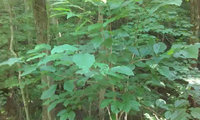

I worked as a professional forester for 50 yrs. and have treaded across thousands of acres from Ohio to Ga. Only encountered cucumber tree a few times. Never saw a stand of cucumbers trees. We did have one on the north Ga property that was 40-50 ft tall. My mother in law didnt believe me when I told her what is was. Unfortunetly, we lost the tree due to as land slip.
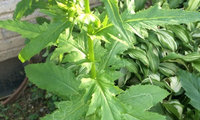
Erechtites hieracifolium is a useful colonizer species. The flower buds never open but the plant produces a couple small disc flowers, that protrude out at the tips for cross pollination, to keep the gene pool healthy. It has a unique taste. Certain insects depend on it, like the leaf miners in the photo. Some other plant had to be the culprit that gave you a rash.

I've got these in numbers. I don't remember them when I moved in, but a couple yrs ago I noticed one or two, now there are many (and 6 ft or more tall). But not a concern for my unmowed areas.
The seed is airborne, like dandelions or thistles. It'll spread far and wide given the right conditions.

They are all gone for the year niw, last one sighted on 16th sept. In my garden, they love pentas the most, followed by zinnia, monarda, jasmine grandiflorum, agapanthus, single flowering fuchsia and lantana. They will sometimes try petunias, gladiolus, mandevilla, russian sage, salvia nemarosa, pelargonium and even clematis but those are not frequented much. I haven't been able to get a cuphea or a salvia greggi but those are my on my list for next year.
This was my 1st year growing the annual Drummond Phlox and it can set seed and grow a second generation all in 1 season. Tall Bellflower is a good late summer plant for hummingbirds. They seed themselves around and don't require much care other than removal when they are done flowering.
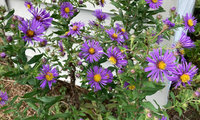
Symphyotrichum novae-anglae
Symphyotrichum prenanthoides
Symphyotrichum racemosum
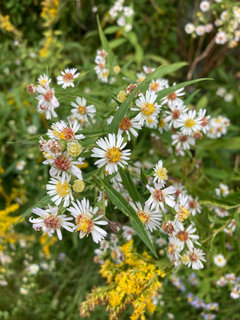
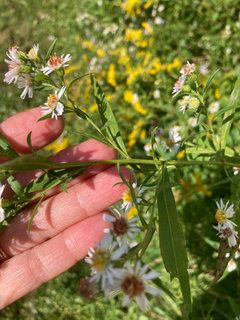
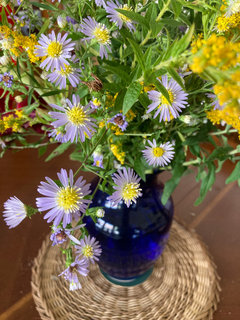
The middle aster prenanthoides is the Crooked Stem Aster, not New York Aster, Symphyotrichum novi-belgii. To me I think the white aster is Symphyotrichum racemosum because Boltonia asteroides flowers are larger and have a much larger number of ray petals. All the flowers are blooming on one side of the stem and are in a racime. There are pendelous linear leaves within the inflorescence. The only other 2 white asters in your area are pilosum and lateriflorum.
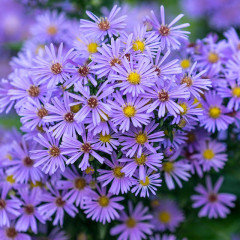
New York Aster, Symphyotrichum novi-belgii

Jay, thanks for correcting me! So I’ve never heard of crooked stem aster, but I grow it. :)
Closeups of the white aster today —
And crooked stem aster:

Wow, that's beautiful! I just re-discovered begonias last year, they really are workhorses aren't they?


@Jay 6a Chicago So P x advena might be an interspecific hybrid as you say. But some sources I read claim that this is not proven, and there are journal articles now claiming it may be a separate species. What's weird here is that such a popular plant in the nursery trade has such a contested lineage in the academic journals.
The only thing that everyone seems to agree on is that the old classification of Pennnisetrum setaceum "Rubrum" is wrong. In spite of that, many nurseries still use that label, which just throws even more confusion around the topic.
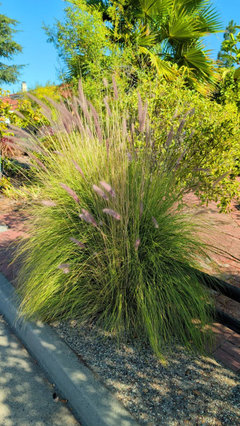
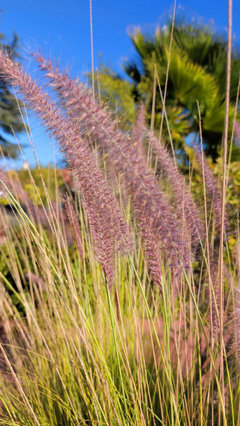
Here's a Pennisetum setaceum (invasive) near my home in California. This one is over five feet tall.
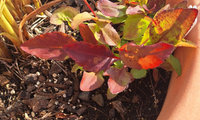

Thanks. The plant is and has been up on my roof, where it essentially receives Full Sun all day. And it's in a very large planter...probably about 16" or so in diameter.
I use FoxFarm Happy Frog potting soil....always add plenty of perlite to the mix, and during the Summer months - in particular - the plant was watered daily, in the early evening. The planter has drainage holes so that I can clearly see excess water draining out, when watering the plant...
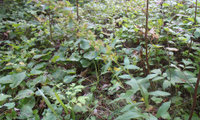

It's always been dry here. The stem does have a hairy feel to it, but not excessive.
I guess that's it then.
Thanks . I'll be collecting seed this fall.
It's stunningly good looking and deserves to have its own place in the sun.
I just discovered last year that I had a nice patch of S. flexicaulis. Finding the
S.hispida makes for a nice combo. I am definitely going to propagate them.
Everybody was bashing me after I cut down all my Oak trees(50) and since then its turned into a jungle of new species popping up here and there. I planted Balsam fir and some are now 20' tall. Paper Birch popped up too.
I checked out my river recently and discovered a dozen tall Iron Weed with their shimmering bright purple flowers. The Monarch butterflies are migrating now and they were hanging out on the Iron weed.
I have a lot of Mayflower and last year I potted some up for you, but they didn't survive in the pot. I'm trying again. Maybe next Spring there will be a surprise.
I do not have Bunch Berry but I've seen it around. It's on my transplant list.
I've never seen Leafcup but do have Prenanthes. It pops up here and there.
The Elm-leaved Goldenrod looks very nice too.
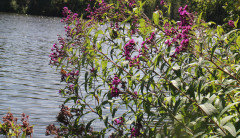
Vernonia, Iron Weed.
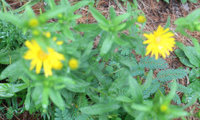
Wow Jay. Thanks. That must be it although I don't detect an hairs. The name sounds a little familiar to me so I probably bought seed at Prairie Moon years ago. They don't list it any more. That's why I couldn't find it.
Mn wildflowers lists it as being in my area
I'm going to transplant some of it this fall into better surroundings.
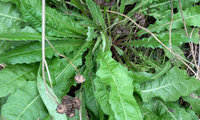
Sorry, Jay, I pulled the clump and tossed it on tbe compost pile.
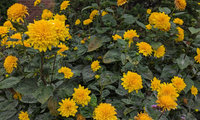
Rouge, my Canna is a classic hybrid between Canna indica and Canna iridiflora. It's called Canna x ehemanii. It looks more like the Canna iridiflora with it's deep red pendelous flowers.
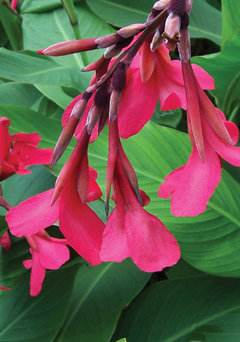
Canna x ehemanii is taller than the usual garden center Canna and it's leaves are wider and bluer. The tubers need special care when they are dormant. That's why they aren't easily available.
All the Canna sold in garden centers today are complex hybrids which were made in France in the late 19th century. They all are collectively known as Canna x generalis. Canna x generalis and Canna indica are the ones sold in garden centers.
I will mention my wish list now.
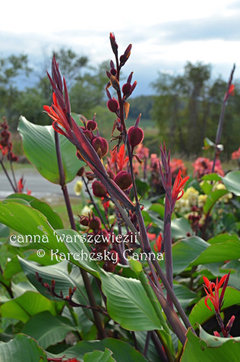
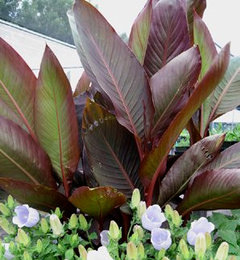
Canna warszwiczii or Canna indica var marszwiczii
2 native North American Canna species and a few non native Canna species were also used on creating Canna x generalis. They are the yellow flowered Canna flaccida and the wide leaved Canna glauca, both of which are native to the deep southeast, as far west as Texas.
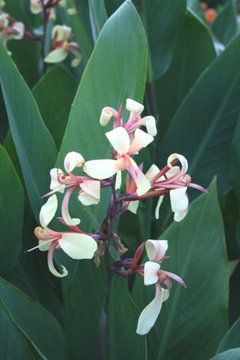
This is 'Panache' a cultivar of Canna glauca. It has a crazy history. Some sea captain brought it to California and it became a pass along plant for years until some plantsman discovered it and realized it's potential.
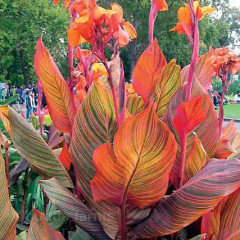
Canna lily 'Tropicana'
There are no wild and pure Canna species with striped leaves. The stripes were created by breeders.
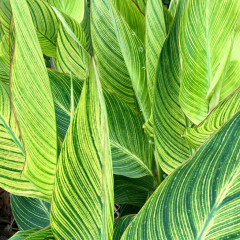
Canna lily 'Bengal Tiger'
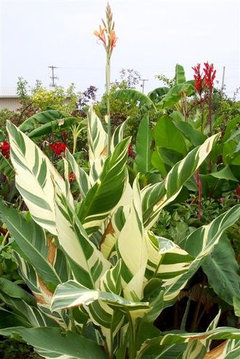
Canna lily Stuttgart
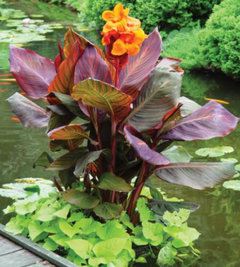
Canna lily 'African Sunset'
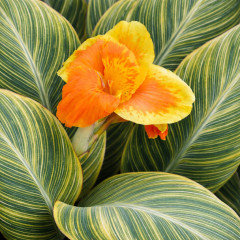
Canna lily 'Pretoria'
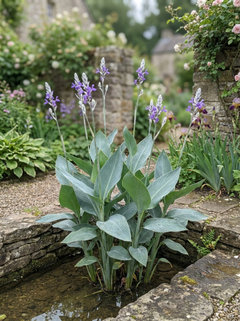
A close relative of Canna Thalia dealbata
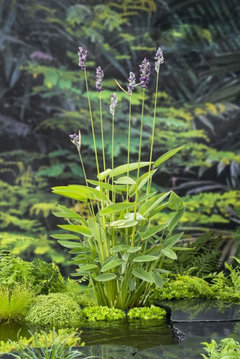
Thalia dealbata
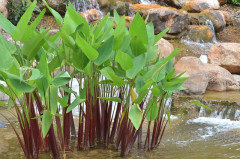
Thalia geniculata
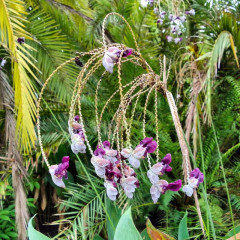
Thalia geniculata
They can be stored yes. I overwinter mine in slightly damp peat moss. I think if they are stored dry, a small portion of the tubers can die. I don't mean whole tubers, just like the edges of some tubers. My basement was too warm so they kept growing new stalks. I had to put them in the garage and run a space heater when it got below freezing. They didn't keep growing when I stored them dry in the basement. The tubers will increase in size over time. Many years ago I grew a striped leaved Canna cultivar and the tubers on it didn't increase as much in size as the more common Canna x generalis. They are a breeze to grow. No pest problems. When the final flower on a spike finishes, I'll remove the stem by cutting it off near a leaf so it's not noticable. Most other garden plants look great growing with Canna.
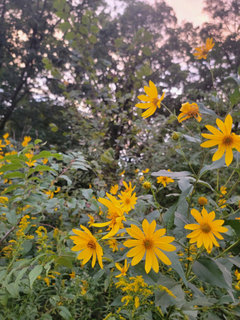
Helianthus divaricatus.
I would prefer this species in my shade garden instead of Jerusalem Artichoke. I could put Woodland Sunflower, Sawtooth Sunflower and Cutleaf Coneflower in there, with the tuberosus and see who wins?

haha! I removed these pots today. I had them here temporarily until the siders get here.
Frost warning tonight and they are going down hill steadily.
Thunbergia still looking good but we'll see after tonight. 35d predicted.
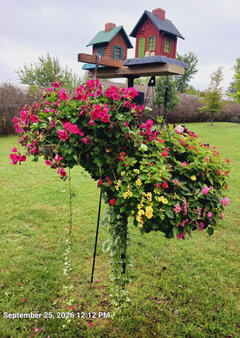

Just on more post for September from me :
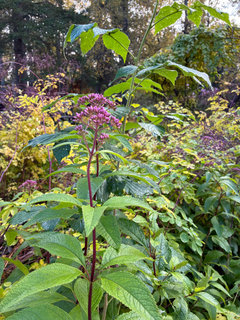
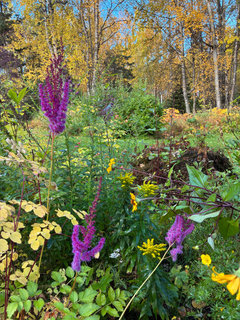
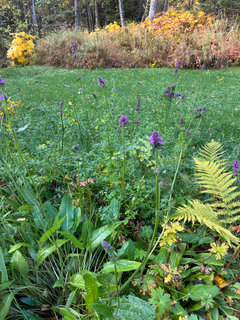
At long last I have a Russian Hollyhock blooming (I've lost so many...)
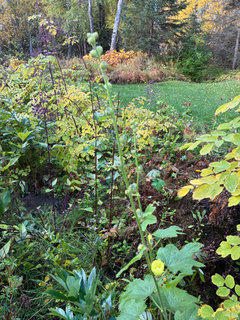
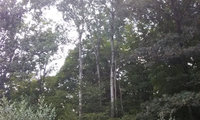
I first thought about p. grandidentata, after all bengs area is part of it's native range.
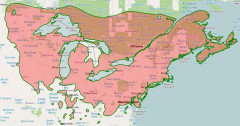
But what I've seen is the same as what the U of M describes.
' The bark on bigtooth aspen a green-gray and smooth, turning white-grayish and becoming furrowed with flat scaly ridges as it matures.'
https://trees.umn.edu/bigtooth-aspen-populus-grandidentata
So there must be geograhical differences?
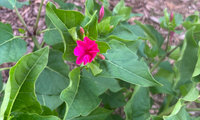
For future reference hostas never have rough leaves. And Pulmonarias never have smooth.
Mirabilis jalapa is aka Marvel of Peru.
Especially love that photo with the aster and goldenrod and...