













How to Choose an Architect
Three experts reveal how to find the best architect for your project

Jo Simmons
10 February 2023
Houzz UK Contributor. I have been an interiors journalist since 1995, writing several books on design and numerous features for glossy homes mags over the years. For Houzz, I cover decorating ideas and trends and interview designers and professionals for their insights. My favourite pieces to write, though, are Houzz Tours, as I love exploring and learning about real homes. Call me curious — or nosy!
Houzz UK Contributor. I have been an interiors journalist since 1995, writing several... More
Choosing an architect for your home renovation is a big decision. For most of us, it might be the only time in our lives we employ this kind of professional and we’re likely to be tying up hard-earned funds and heartfelt ambition in the project.
Obviously, it matters that you love the feel and style of an architect’s previous work, but there are lots of other factors to consider, including qualifications, cost and whether you click enough to work together for several months.
To help you get it right, we asked three experts for advice on finding an architect, from where to look to what you should ask at your first meeting.
Professional advice from: Paul Hughes of PAD Architects; Brian O’Tuama of Brian O’Tuama Architects; Michael Schienke of Vorbild Architecture
Also in this series: How to Choose a Cabinet-maker l How to Choose an Interior Designer l How to Choose a Tiler l How to Choose an Electrician l How to Choose a Kitchen Designer l How to Choose a Plumber
Obviously, it matters that you love the feel and style of an architect’s previous work, but there are lots of other factors to consider, including qualifications, cost and whether you click enough to work together for several months.
To help you get it right, we asked three experts for advice on finding an architect, from where to look to what you should ask at your first meeting.
Professional advice from: Paul Hughes of PAD Architects; Brian O’Tuama of Brian O’Tuama Architects; Michael Schienke of Vorbild Architecture
Also in this series: How to Choose a Cabinet-maker l How to Choose an Interior Designer l How to Choose a Tiler l How to Choose an Electrician l How to Choose a Kitchen Designer l How to Choose a Plumber
First of all, why choose an architect at all?
Employing an architect is a significant investment, but Michael Schienke explains why it’s not something to feel nervous about.
“An architect has done what you’re trying to do multiple times successfully in the past, has learned from these jobs and, on top of that, has studied for years and even had professional experience of working for many other architects,” he says.
“They will have insurance and tried-and-tested builders to work with, too, and are very helpful and knowledgeable,” he continues. “The cost of an architect is a small part of the total budget and a fraction of the increased value of your property.”
Employing an architect is a significant investment, but Michael Schienke explains why it’s not something to feel nervous about.
“An architect has done what you’re trying to do multiple times successfully in the past, has learned from these jobs and, on top of that, has studied for years and even had professional experience of working for many other architects,” he says.
“They will have insurance and tried-and-tested builders to work with, too, and are very helpful and knowledgeable,” he continues. “The cost of an architect is a small part of the total budget and a fraction of the increased value of your property.”
What’s the biggest mistake people make when choosing an architect?
Not being adequately prepared for the first meeting is a common error, Paul Hughes says. “It’s important to take time to prepare a wish-list of your requirements, both spatial and stylistic. If well considered and comprehensive, this will enable the architect to offer some initial thoughts and help you decide whether you feel they can meet your aspirations.”
Another mistake, according to Brian O’Tuama, is “not having a shared vision of what can be achieved, and not having realistic expectations”.
Beware of trying to cut financial corners, too. “A mistake is not speaking to the architect and choosing the cheapest one you can get your hands on, or only employing one for part of the process,” Michael says. “Clients sometimes come to us after starting on their own or with builders and realising halfway through they need advice. They admit they rushed and wanted to save money.”
Not being adequately prepared for the first meeting is a common error, Paul Hughes says. “It’s important to take time to prepare a wish-list of your requirements, both spatial and stylistic. If well considered and comprehensive, this will enable the architect to offer some initial thoughts and help you decide whether you feel they can meet your aspirations.”
Another mistake, according to Brian O’Tuama, is “not having a shared vision of what can be achieved, and not having realistic expectations”.
Beware of trying to cut financial corners, too. “A mistake is not speaking to the architect and choosing the cheapest one you can get your hands on, or only employing one for part of the process,” Michael says. “Clients sometimes come to us after starting on their own or with builders and realising halfway through they need advice. They admit they rushed and wanted to save money.”
How can you avoid these mistakes and any others?
Paul recommends preparing a detailed brief of your project before you meet with an architect, including as much information as you can, from problems that need solving to how you intend to use the space.
“If you have a budget you’re working to, let the architect know this at the outset. Ask them for their estimated budget for what you’re hoping to do in order to avoid disappointment later in the process,” he says.
Brian agrees that discussing money upfront is important. “Do talk about how much you’re willing or able to spend on the project, including fees and VAT,” he says.
Paul recommends preparing a detailed brief of your project before you meet with an architect, including as much information as you can, from problems that need solving to how you intend to use the space.
“If you have a budget you’re working to, let the architect know this at the outset. Ask them for their estimated budget for what you’re hoping to do in order to avoid disappointment later in the process,” he says.
Brian agrees that discussing money upfront is important. “Do talk about how much you’re willing or able to spend on the project, including fees and VAT,” he says.
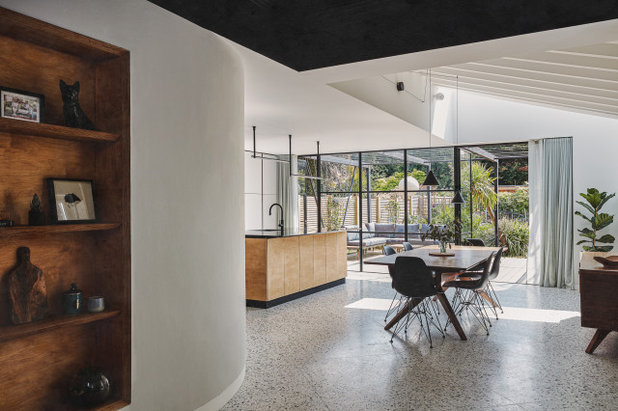
How should you set about finding an architect? Who might you talk to?
Brian says word of mouth referrals are a useful starting point, but that it’s also a good idea to look through past projects to see if they appeal to you.
On Houzz, it’s easy to browse through the profiles of architects in your area. You can take a look at their projects, read reviews and sometimes find more in-depth descriptions of their work if one of their projects has been featured as a Houzz Tour.
Brian says word of mouth referrals are a useful starting point, but that it’s also a good idea to look through past projects to see if they appeal to you.
On Houzz, it’s easy to browse through the profiles of architects in your area. You can take a look at their projects, read reviews and sometimes find more in-depth descriptions of their work if one of their projects has been featured as a Houzz Tour.
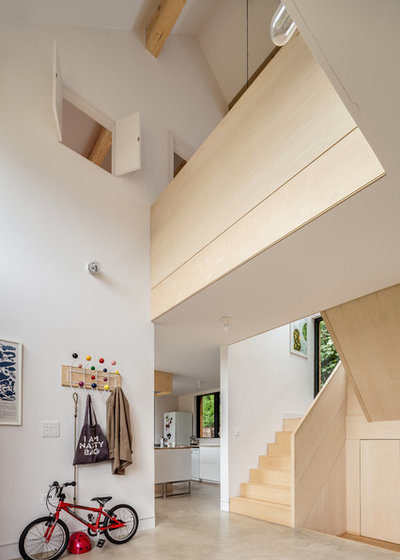
What should you be looking for on an architect’s website or profile?
Brian offers this useful checklist:
Michael advises that you look for pictures of what the architect has actually built, not simply what they’ve designed. “They also need to make it easy for you to understand why you should hire them,” he says. “The process should be explained and they should present themselves as helpful professionals.”
Brian offers this useful checklist:
- Professional photography showing interesting, well-considered spaces and attention to detail.
- Projects of a similar scale and scope (but not necessarily the same ‘style’) to the one you’re embarking on.
- Images of furnished spaces, not empty ones
- An outline of the process of working with the architect and the practice on a project.
Michael advises that you look for pictures of what the architect has actually built, not simply what they’ve designed. “They also need to make it easy for you to understand why you should hire them,” he says. “The process should be explained and they should present themselves as helpful professionals.”
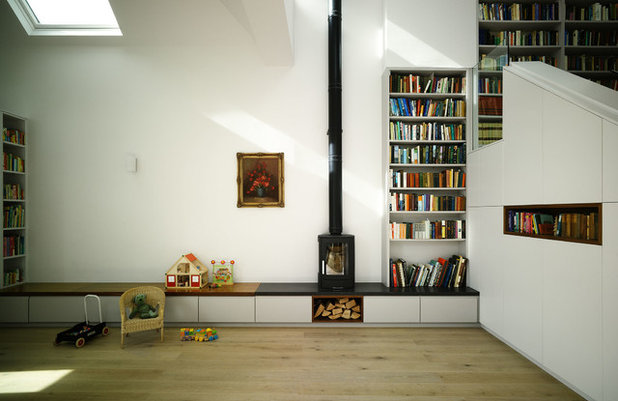
Is it important that the architect is local to you?
No, is the short answer. “It’s not necessary in most cases, but the architect should have worked on similar properties in comparable areas,” Michael says. “Say your house is listed [for example] – ask them about their experience with that.”
No, is the short answer. “It’s not necessary in most cases, but the architect should have worked on similar properties in comparable areas,” Michael says. “Say your house is listed [for example] – ask them about their experience with that.”
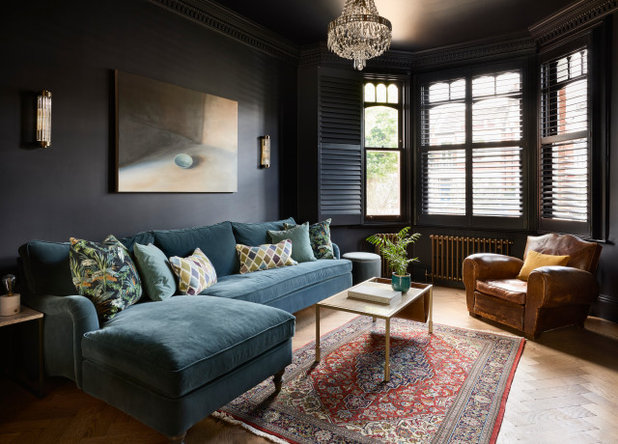
What qualifications should an architect have?
“The title ‘Architect’ is protected by law in the UK,” Brian says. “In order to use it, an individual must be on the register held by the Architects Registration Board (ARB).”
To be included on this register, a candidate will need to have a degree from an accredited academic institution and a minimum of two years’ experience of working in the UK under the supervision of a registered architect, among other things.
“Be mindful that, in many cases, relevant experience is equally, if not more, important than a qualification,” he says.
“Membership of RIBA (the Royal Institute of British Architects) also ensures a code of professional conduct will be adhered to,” Paul adds.
“The title ‘Architect’ is protected by law in the UK,” Brian says. “In order to use it, an individual must be on the register held by the Architects Registration Board (ARB).”
To be included on this register, a candidate will need to have a degree from an accredited academic institution and a minimum of two years’ experience of working in the UK under the supervision of a registered architect, among other things.
“Be mindful that, in many cases, relevant experience is equally, if not more, important than a qualification,” he says.
“Membership of RIBA (the Royal Institute of British Architects) also ensures a code of professional conduct will be adhered to,” Paul adds.
Should you ask to see references or visit other projects the architect has completed?
The simple answer is yes. “It’s important to ask for references and testimonials. I would strongly advise a visit to a completed project if possible, too,” Paul says.
Brian agrees. “Do visit a completed project or two,” he says. “Choose ones that are of similar scope to yours, and meet the clients from those projects. That way you can discuss how they enjoyed working with the architect.”
The simple answer is yes. “It’s important to ask for references and testimonials. I would strongly advise a visit to a completed project if possible, too,” Paul says.
Brian agrees. “Do visit a completed project or two,” he says. “Choose ones that are of similar scope to yours, and meet the clients from those projects. That way you can discuss how they enjoyed working with the architect.”
Is it vital to ‘click’ with your architect?
“Definitely,” Brian says. “That’s probably the most important thing of all. You’ll be seeing a lot of them over the course of the preparation, design and construction stages of a project. In many cases, this will be more than a year in your life, so it’s crucial there’s a meeting of minds, and that mutual trust can develop.”
“I would say the most important thing is trust and whether you can see yourself working with this person for several months, if not a year,” Michael says. “Ask them questions and speak to their previous clients if you feel you need more convincing. More than anything, see if you like talking to them. If yes and their fee is not unreasonable, go for it!”
“Definitely,” Brian says. “That’s probably the most important thing of all. You’ll be seeing a lot of them over the course of the preparation, design and construction stages of a project. In many cases, this will be more than a year in your life, so it’s crucial there’s a meeting of minds, and that mutual trust can develop.”
“I would say the most important thing is trust and whether you can see yourself working with this person for several months, if not a year,” Michael says. “Ask them questions and speak to their previous clients if you feel you need more convincing. More than anything, see if you like talking to them. If yes and their fee is not unreasonable, go for it!”
What should you be asking at the first meeting?
All our experts agreed that it’s a good idea to ask the architect to explain all the stages of the work: the process, timelines and budget required.
Then, if you haven’t already established whether the architect has done projects of a similar type and scale to yours, find out now.
“Tell them your full address, let them check its planning history and show them any images that have inspired you and reflect how you’d like your property to look at the end,” Michael says.
“Tell them exactly what you want the outcome to be (one more bedroom; an open-plan kitchen-diner) and, really importantly, your budget expectations,” he says. “See how specifically they respond to your enquiries; see if they ‘care’.”
“Also ask if there’s anything you’ve told the architect about what you’d like to do that gives them cause for concern from a planning, buildability, cost or any other perspective,” Brian adds.
Tell us…
Do you have any other helpful tips for choosing an architect? Please share them in the Comments.
All our experts agreed that it’s a good idea to ask the architect to explain all the stages of the work: the process, timelines and budget required.
Then, if you haven’t already established whether the architect has done projects of a similar type and scale to yours, find out now.
“Tell them your full address, let them check its planning history and show them any images that have inspired you and reflect how you’d like your property to look at the end,” Michael says.
“Tell them exactly what you want the outcome to be (one more bedroom; an open-plan kitchen-diner) and, really importantly, your budget expectations,” he says. “See how specifically they respond to your enquiries; see if they ‘care’.”
“Also ask if there’s anything you’ve told the architect about what you’d like to do that gives them cause for concern from a planning, buildability, cost or any other perspective,” Brian adds.
Tell us…
Do you have any other helpful tips for choosing an architect? Please share them in the Comments.

What are you working on?


Related Stories
Decorating
Where Do I Start When Renovating or Redecorating My Home?
By Eva Byrne
Keen to get going on a project but not sure where to begin? Read this practical guide to getting started
Full Story
Gardens
How Do I Create a Drought-tolerant Garden?
By Kate Burt
As summers heat up, plants that need less water are increasingly desirable. Luckily, there are lots of beautiful options
Full Story
Architecture
21 Ways Designers Are Incorporating Arches Into Homes
By Kate Burt
Everywhere we look on Houzz right now, a cheeky arch pops up. How would you add this timeless architectural feature?
Full Story
Lifestyle
How to Improve the Air Quality in Your Home
Want to ensure your home environment is clean and healthy? Start by assessing the quality of your air
Full Story

Gardens
Can I Have a Lawn-free Garden That’s Kind to the Environment?
Try these tips to help you plan a garden without grass that’s still leafy and eco-friendly
Full Story
Sustainability
How Can I Incorporate Biodiversity Into My Building Project?
By Kate Burt
If you’re renovating, you have a brilliant opportunity to plan in nature-friendly touches at the outset
Full Story
Lofts
How Do I Begin a Loft Conversion?
Wondering where to start when converting your loft? Ask yourself these questions to ensure you plan well
Full Story
Living Rooms
Where Designers Would Spend and Save in a Living Room
By Cheryl F
It’s your main relaxation space, so what should you splurge or scrimp on in the living room?
Full Story
Architecture
Japan’s Riken Yamamoto Wins the 2024 Pritzker Architecture Prize
The architect is known for creating indoor-outdoor homes and buildings that foster a strong sense of community
Full Story
Working with Pros
How to Choose an Electrician
By Cheryl F
From what to ask to getting the best result possible, here’s what to know when you’re hiring an electrician
Full Story
We employed an architect once to design an extension to an Edwardian house. It was similar to one he had already completed on his own house. He was the highlight of the project, really smart and offered invaluable advice. We had some great laughs usually at the builder's expense! I wouldn't attempt a large project without one. One word of advice, pick someone you like, it helps when things get rough. He also charged pro rata for project management which was a huge help when required. I'd use him again in a heartbeat, the builder maybe not.
Many thanks @Jo Simmons .
@Sue Dobson - Of course, like with all professionals, you need to talk and maybe meet a few of them to see who is the better fit. ZOOM makes it much more convenient nowadays too, for both sides.